
Who was this group of uniformly dressed men sitting on the steps of a telegraph office?
This cabinet card features a small photograph of an unidentified group of men. The overall card size is 4 x 6 inches. Could this show a group of volunteers for Teddy Rooselvelt’s legendary volunteer cavalry?
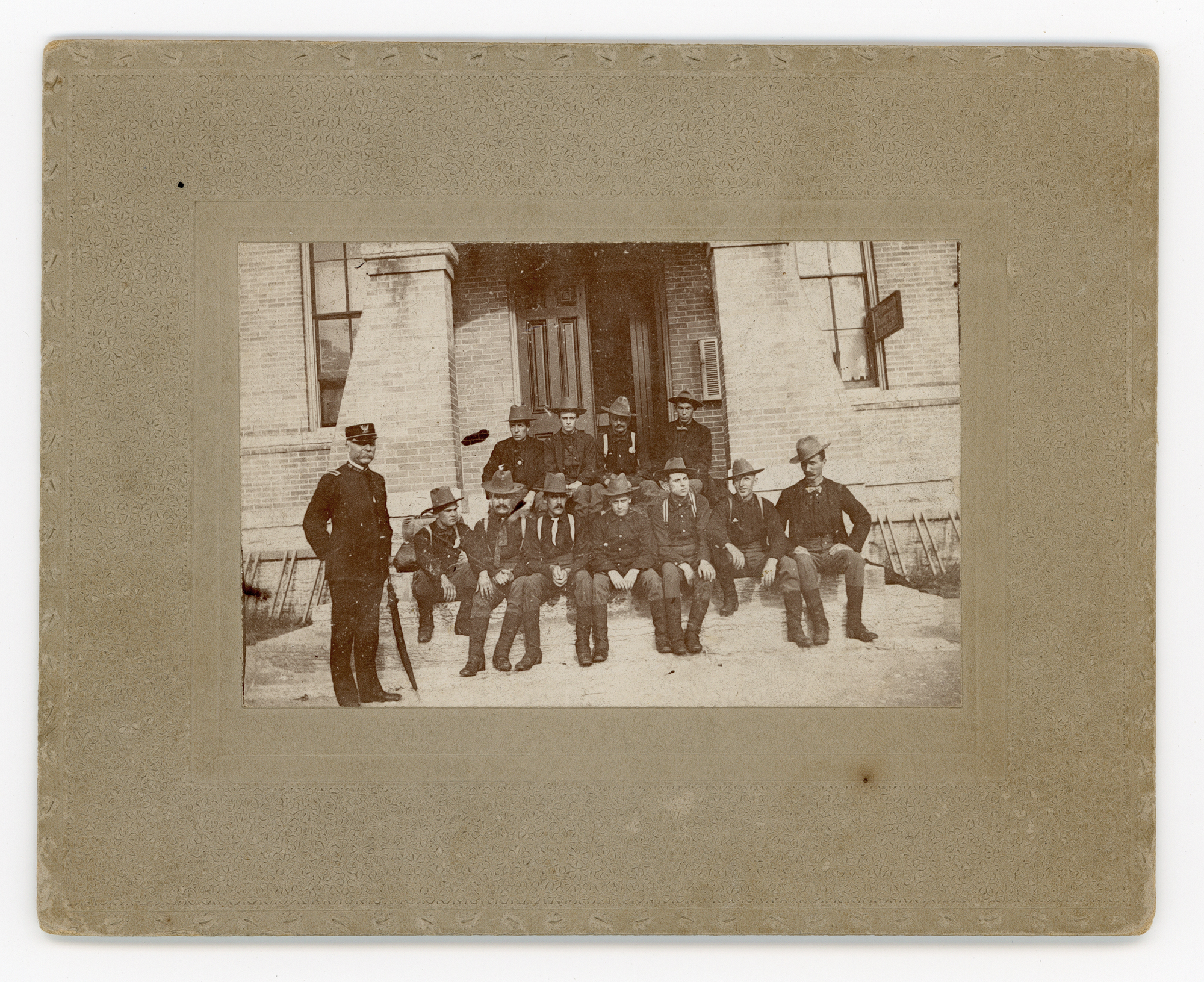
Was this a photograph of a group of Teddy Roosevelt’s Rough Riders? It shows a group of 11 similarly dressed men posed on the steps of a building that features a sign that says “Western Union Telegraph Office.” Standing at the left of the frame is an older gentleman in what appears to be a Western Union uniform.
Western Union telegraph offices were sometimes in their own buildings, but they could also be found in hotels, train stations, and post offices.
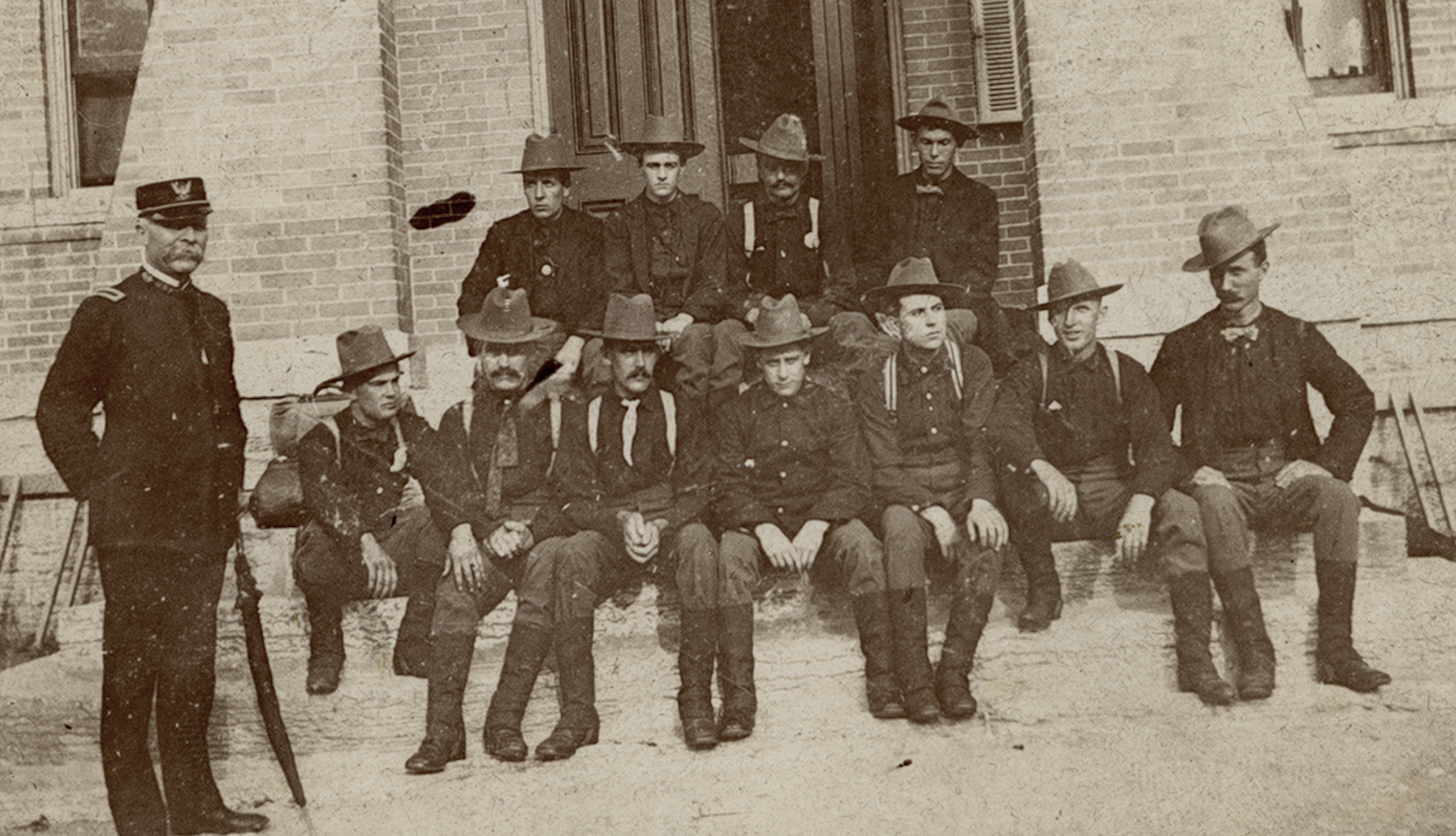
While their attire is similar to that of published photos of the Rough Riders, there are also differences.
Similarities: The men are all wearing dark shirts, western style cowboy hats, and boots with tall buttoned gaiters. Most of them are wearing suspenders. This matches closely to known photos of the Rough Riders (two examples are shown below).
Differences: No one in the unidentified group portrait displays any sign of military insignia or rank, Nor do they have bandanas. No one in the Rough Riders examples shown below can be seen wearing neck ties or bow ties, as shown in the mystery photograph above.
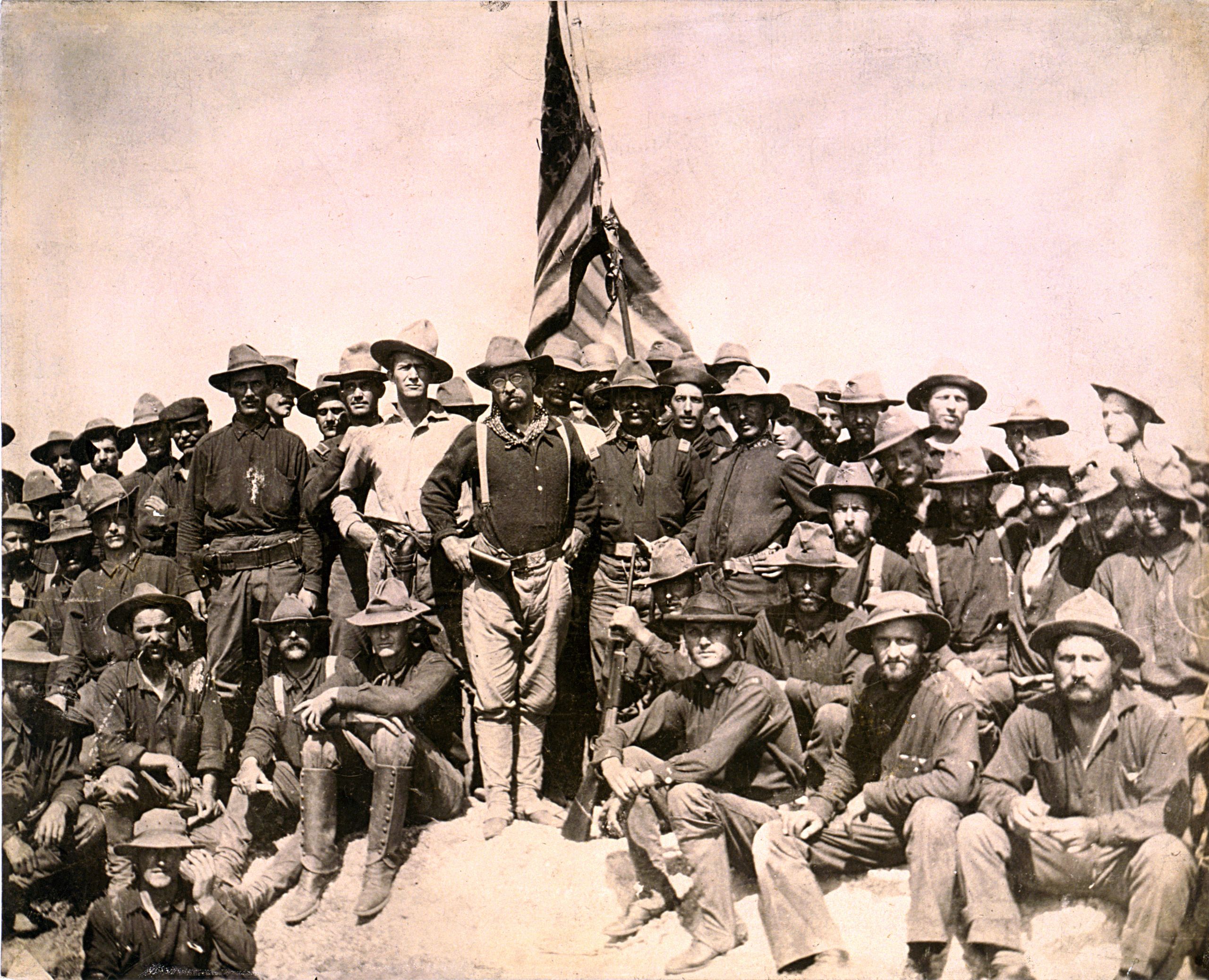
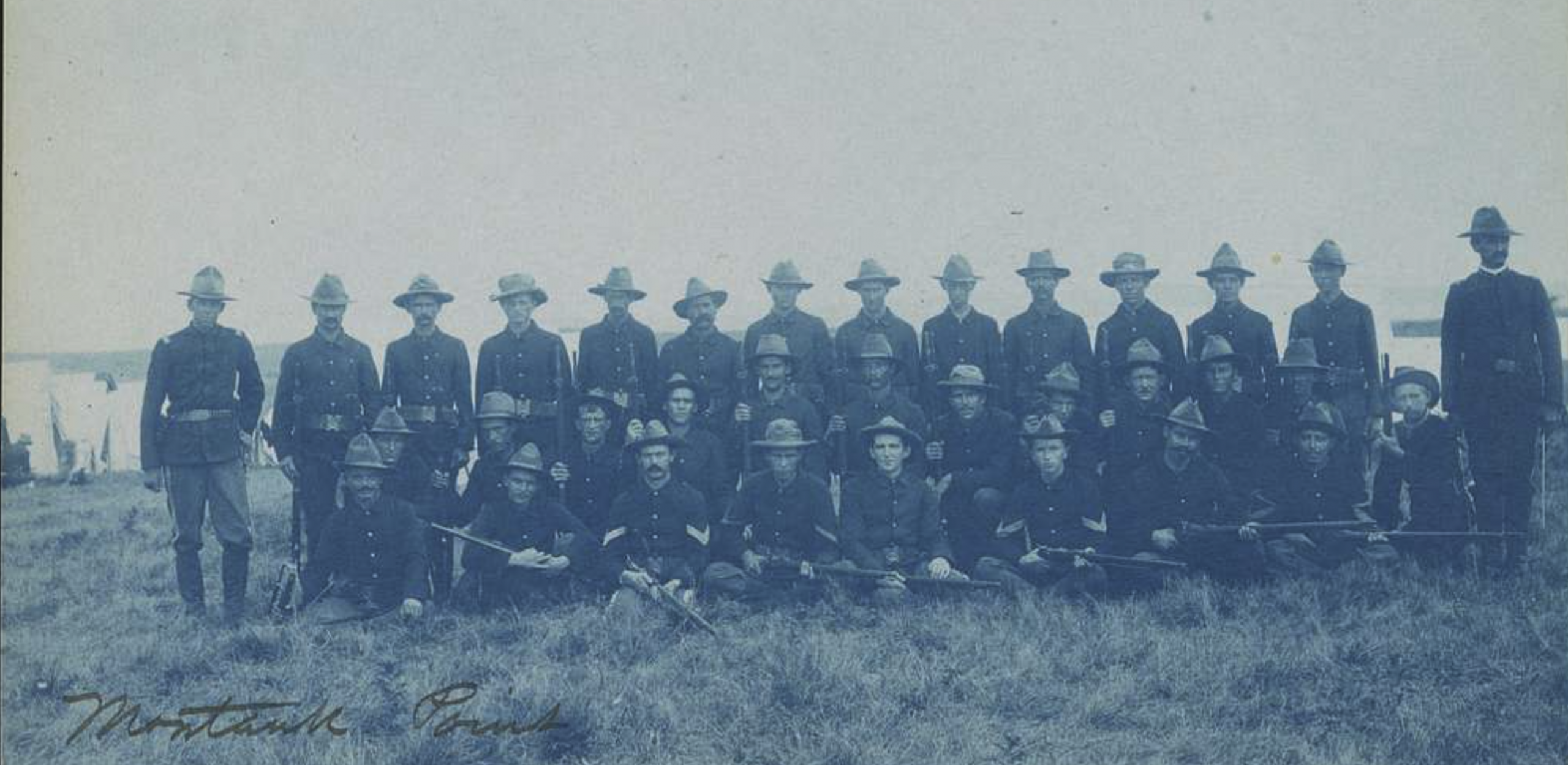
The Rough Riders was the popular name for the 1st United States Volunteer Cavalry. There were three regiments raised in 1898, during the Spanish-American war, but only one saw actual military action in Cuba.
Because the battlefront was in the tropical climate of Cuba, frontiersmen from the warm southwestern states of Texas, Oklahoma, Arizona, and New Mexico were sought. The army needed capable horsemen (although the horses were never sent to Cuba, meaning the cavalry actually became a grumbling infantry). When Theodore Roosevelt became involved, a hodge-podge of others volunteered — everyone from college boys to gamblers, and Texas Rangers to Native Americans.
Links and Sources
Wikipedia. “Rough Riders.”
Discover more from Shadows and Light
Subscribe to get the latest posts sent to your email.