From My Antique Photography YouTube Channel: An Antique Tintype in a Decorative Oval Case
In this video, photographer Keith Dotson examines a portrait in a small oval case from the era of the American Civil War to determine if it’s a tintype or an ambrotype.
In this video we’re checking out this small antique portrait from circa early 1860s, which is framed in a decorative and protective case made of imitation gutta percha — which is an early form of thermoplastic produced in molds.
Tintype or Ambrotype?
I think this is a tintype under glass — but to be honest it’s difficult to be certain. A tintype is a wet collodion photo printed onto a thin piece of iron (not tin) coated with a base of black lacquer. An ambrotype is a wet collodion photo printed directly onto the back of a sheet of glass, which is placed over a dark background.
Under glass, the two can be extremely difficult to distinguish from each other.
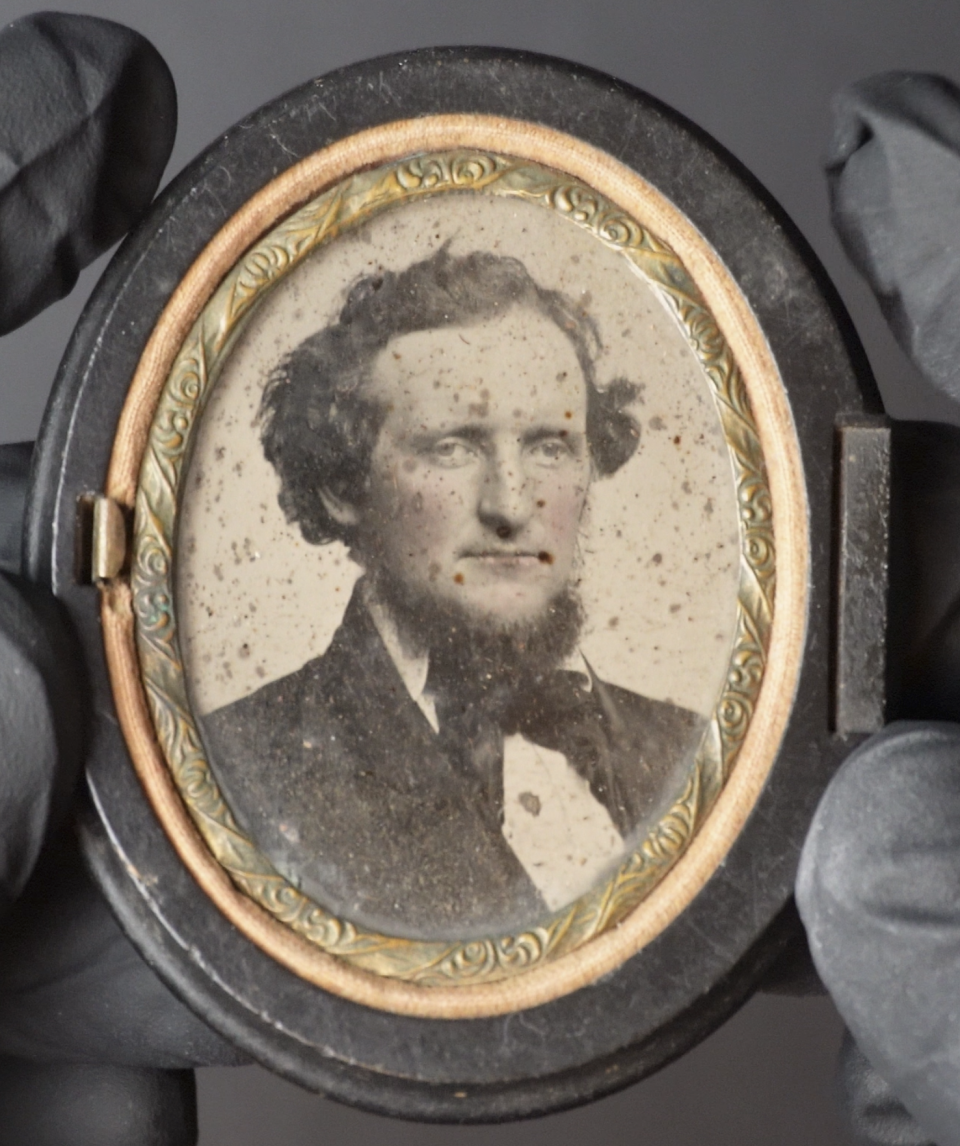
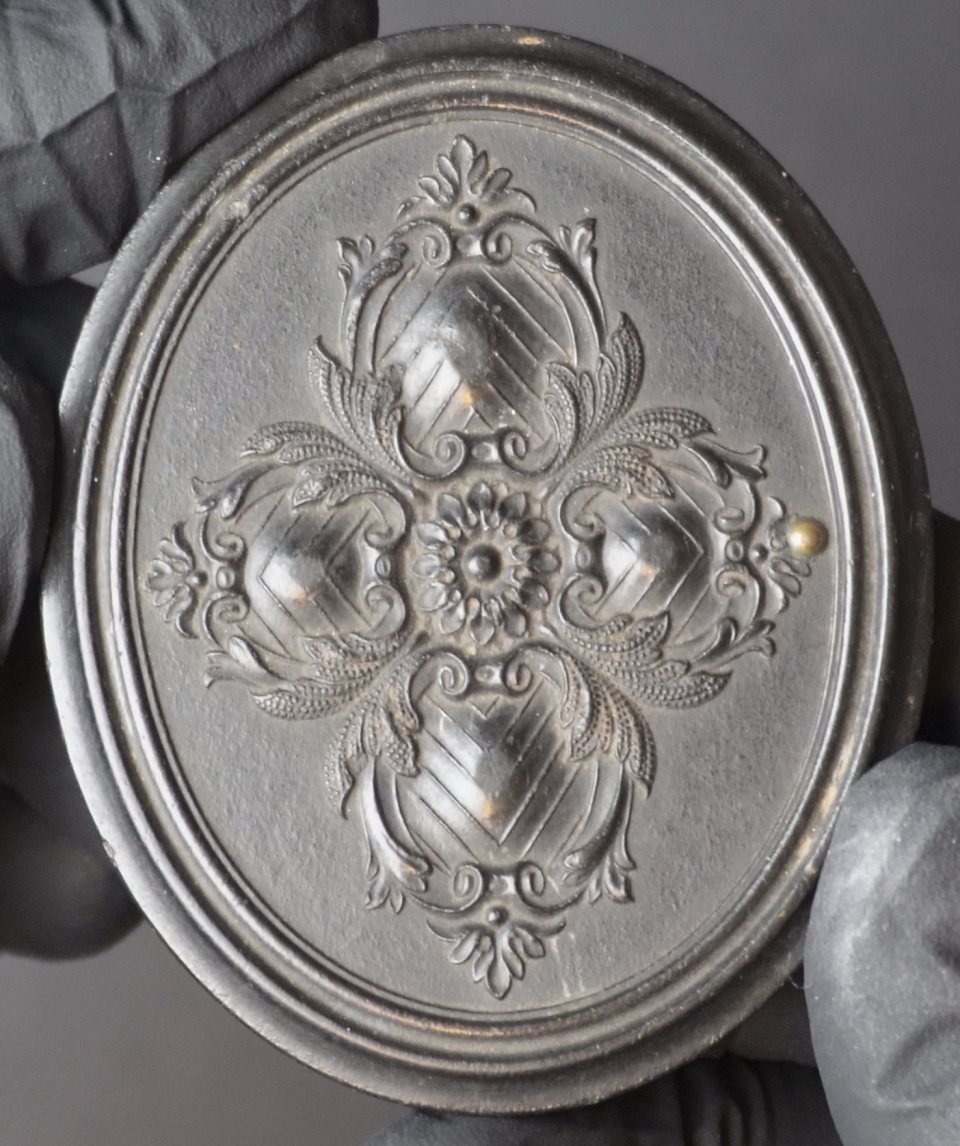
I gently removed the photograph from its case to exam it more closely but even so, it’s still hard to be sure thanks to the way the preserver is wrapped around it.
But the main thing that makes it look like a tintype is that there appears to be some kind of evaporation or droplets on the back of the glass, which would indicate that there’s a narrow space between the glass and the photograph. And under raking light, I can detect a somewhat irregular surface, consistent with a piece of metal.
When was it Made?
My best single estimate for the date if this portrait would be between 1860–1863.
The man’s hairstyle, full beard, relatively high-collared shirt, dark coat, and overall grooming are quite consistent with the late 1850s through 1860s, a time frame that coincides with the peak popularity of tintypes.
Regardless, it’s a fine little portrait from the Civil War era.
See more cool old photos and learn about antique photographic processes on my Antique Photography Channel on YouTube here
Discover more from Shadows and Light
Subscribe to get the latest posts sent to your email.