
My first time ever holding an unframed daguerreotype in my hand
I made a rare discovery — or at least it’s the first time I have come across one of these. It’s an unframed — and badly degraded daguerreotype portrait, most likely made in the 1840s. I recently found this for sale for a few dollars in a box of snapshots and cabinet cards in an antique store. It was tagged as being an “old photo on copper.”
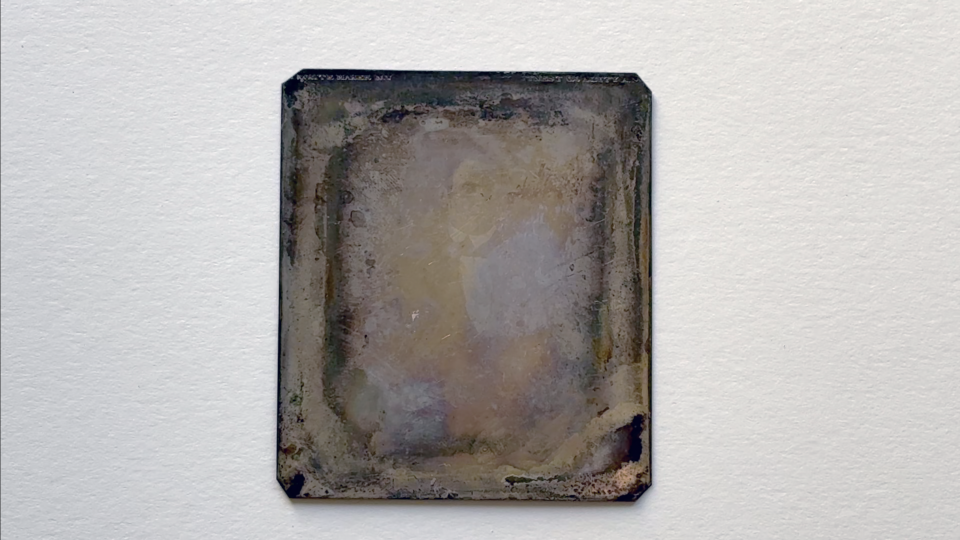
Daguerreotypes are fragile and most of the time they are carefully preserved and protected — sealed inside a frame. I have read that daguerreotypes are exceedingly fragile and should not be handled except by experienced conservators.
Because of the way the plates were sensitized — essentially they were coated with the light sensitive emulsion by way of chemical vapors — it’s been said that you could brush away the image with the slightest sweep of a finger.
Invented by Frenchman Louis Daguerre and introduced to the world in 1839, daguerreotypes were the first wide adopted photographic process. They were printed on thin copper sheets which had been silver plated on one side, thoroughly cleaned with hazardous chemicals, polished and buffed to a mirror-like sheen, and then coated with light-sensitive chemistry.
Because they were so shiny, they were often called “mirrors with a memory,” and had to be held at an angle to see the image.
Plate Made by E. White of New York
But what makes this old ruined daguerreotype interesting to me is the maker’s hallmark.
It says “E. WHITE MAKER N.Y.” on the front top left corner and “FINEST QUALITY A No.1” on the top right corner. Some of his plates carry the mark “Second Quality,” based on the quality of the silver used in the plate.
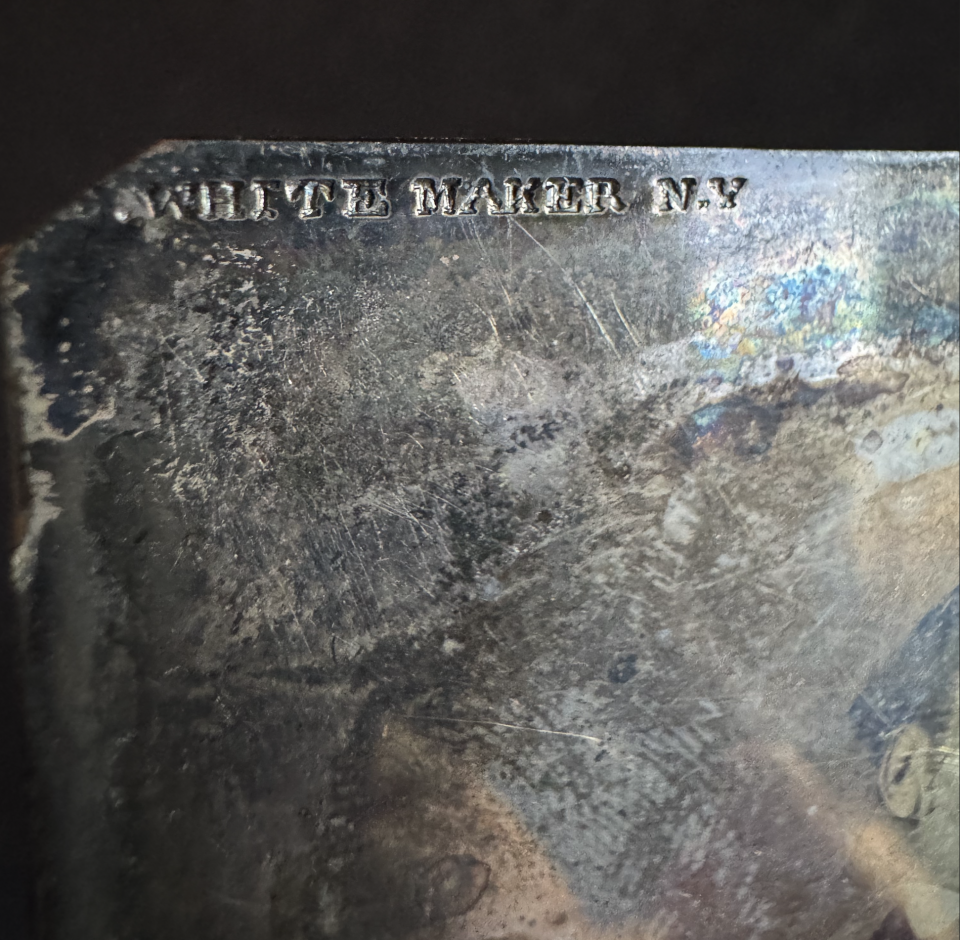
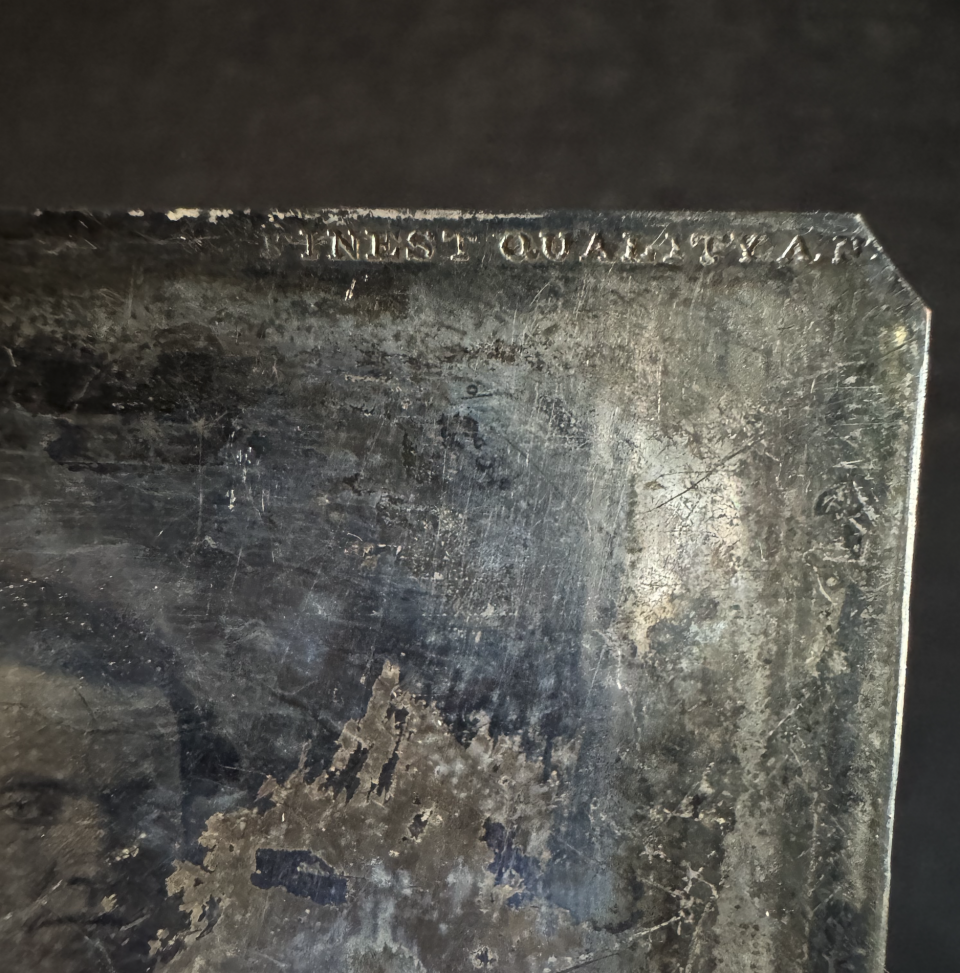
Edward White was a daguerreotype plate maker in New York City. He is also known to have been a photographer, so while not assured, it’s possible he may have used one of his own plates to make this portrait.
White was listed in the New York City business directory at 175 Broadway in the 1840s and in 1850. He is generally believed to have been most active in the 1840s.
Edward White has been recognized as one of the most significant early daguerreotypists.
Discover more from Shadows and Light
Subscribe to get the latest posts sent to your email.