
In this post we examine an antique photograph from my collection, with the help of A.I. (and a hand-written inscription)
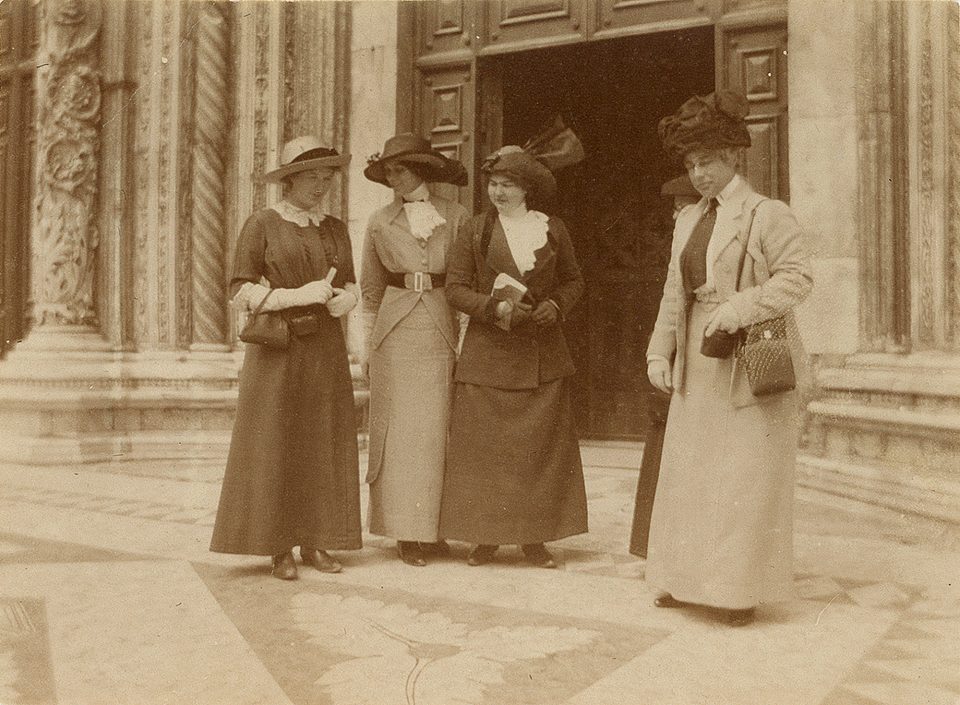
This small sepia-toned photograph is only four inches wide and three inches tall, but it packs a lot of information. It shows five well-dressed and presumably affluent tourists in front of the Duomo in Siena, Italy.
To me the thin paper resembles the same paper as a cabinet card print that was never mounted to a backing card.
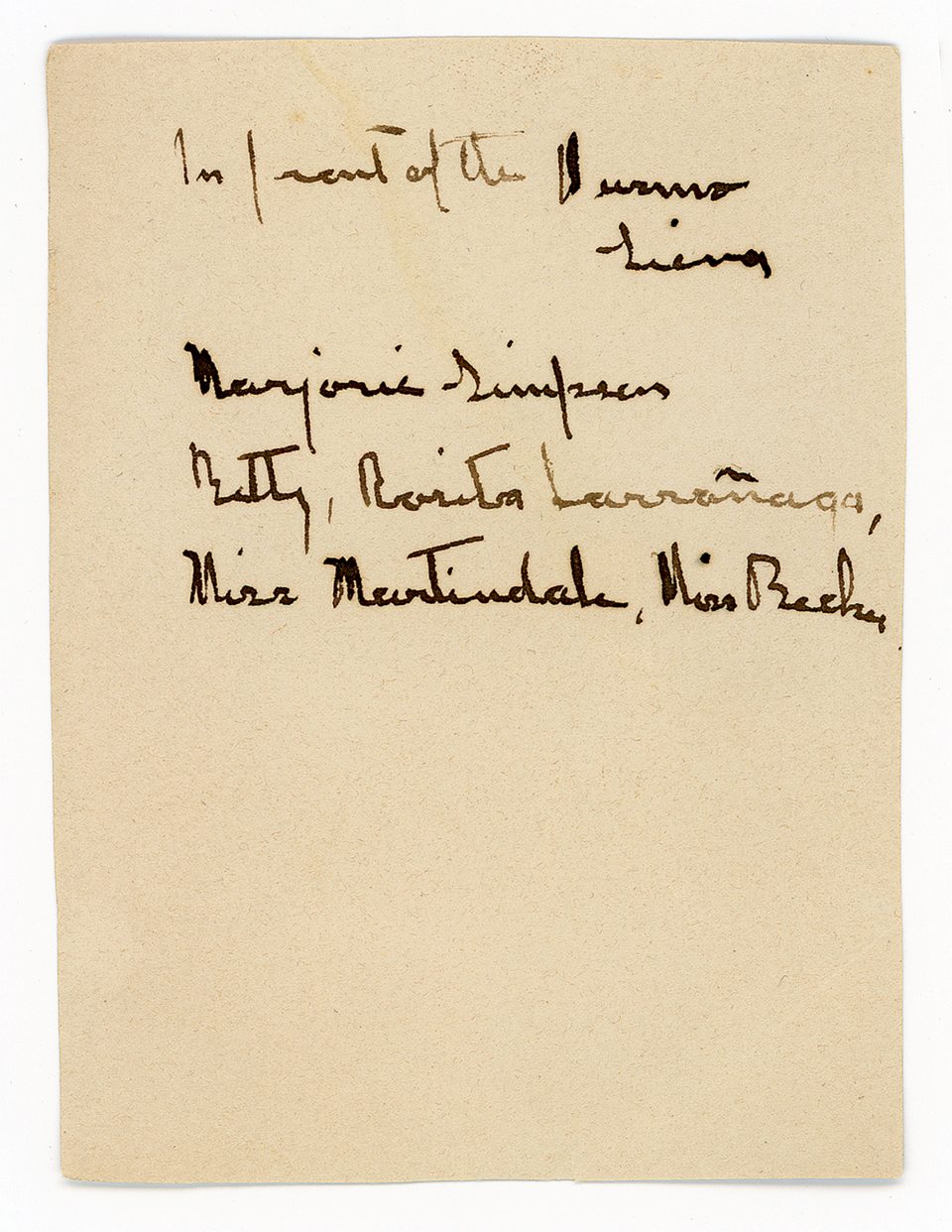
As I’ve done recently, I asked Google Gemini to perform an analysis of the photograph to offer a date, and to confirm the location. Here is what A.I said about the photograph:
Summary
- Location: Portal of the Duomo di Siena, Italy.
- Estimated Date: 1910 (Range: 1908–1912).
- Context: A group of affluent tourists (likely American or British) posing on the marble platform of the cathedral during a European tour.
This is a wonderful historical snapshot. The building is the Duomo di Siena (Cathedral of Santa Maria Assunta) in Siena, Italy.
Based on the architectural details and a thorough analysis of the women’s fashion, I can provide a precise date and context for this photograph.
Location Confirmation: Duomo di Siena
Several architectural “fingerprints” confirm this is the western facade of the Siena Cathedral:
- The Twisted Columns: The slender, spiraling (Solomonic) columns seen on the left are a signature element of the side portals of the cathedral’s facade, designed by Giovanni Pisano in the late 13th century.
- Marble Striping: You can clearly see the alternating horizontal bands of white and dark greenish-black marble on the door frame and columns, which symbolize the colors of the civic coat of arms of Siena.
- Pavement Patterns: The intricate marble inlay on which the women are standing is part of the celebrated pavement of the Piazza del Duomo. The large acanthus-leaf motif visible under their feet is a specific design found on the exterior platform just before the entrance.
- The Doors: The dark, paneled doors are the original wooden doors of the cathedral. These were eventually replaced by the famous bronze “Porta della Riconoscenza” (Door of Gratitude) in 1946 and the central bronze doors in 1958.
Dating the Photograph: Circa 1910
We can date this image to a narrow window between 1908 and 1912, with 1910 being the most likely year, due to the specific “Belle Époque” fashion markers:
- The “Merry Widow” Hats: All three women are wearing the massive, ornate “Merry Widow” style hats that became a global sensation following the 1907 operetta of the same name. These hats reached their peak size and popularity between 1909 and 1911.
- The Silhouette: Their silhouettes have moved away from the “S-bend” corset (pigeon-breast) of the early 1900s toward a straighter, high-waisted, and more columnar look. This “Directoire” revival was the height of fashion around 1910.
- The Tailored Suits (Tailleurs): The woman in the center is wearing a quintessential Edwardian walking suit with a high-collared jabot (ruffled blouse). This was the standard “uniform” for affluent female travelers of the era.
- The Camera Case: The woman on the far right appears to be carrying a leather case for a Kodak Folding Pocket Camera. This specific model was a favorite of tourists during the “Grand Tour” era just before World War I.
Video: Describing and Discussing this Photograph
Discover more from Shadows and Light
Subscribe to get the latest posts sent to your email.