Close
Flipping page-by-page through a tattered 1860s family photo album from Ohio

Flipping page-by-page through a tattered 1860s family photo album from Ohio

Antique photo album contains tintypes and cartes de visite

Photographer Keith Dotson flips page-by-page through a tattered 1860s family photo album from Ohio

In this blog post, we take an in-depth look at what must have been the prized possession of an Ohio family 160 years ago — a beautifully made photo album stuffed full with many tintype and carte de visite portraits of family and possibly friends.

The family probably lived in or near Sandusky Ohio in the 1800s. Sandusky is on the shore of Lake Erie, roughly midway between Cleveland and Toledo.

Some names seen handwritten on the photos in pencil include Cox, Seidel, Stoutenour, Riddle, and others.

After some research, I think this album would have been relatively fancy and expensive in its day, and would probably date to the late 1860s or early 1870s. Like most photo albums, the portraits inside date from various years, beginning in the mid to late 1860s. Since the pages are loose, they may be out of order from the way the owner would have placed them.

Unfortunately, the spine is long-gone, but the beautiful brass clasp is still intact. This album holds very rigid, cardstock pages with die-cut openings to hold photographs without adhesive. Brass clasps were common on photograph albums of the 1860s because the thick card pages tended to swell as photographs were added, and the clasp helped keep the boards flat.

The album contains two types of photographs — cartes de visite were very popular from roughly 1860 to the early 1870s. They were low-cost portraits on albumen paper mounted to a small card about the size of a business card. These could be reproduced in quantities. They were intended to be exchanged as calling cards when someone visited.

Tintypes which were also at their peak during the Civil War era through the 1870s, although they have persisted even into current times. They were wet plate collodion prints made directly onto a thin sheet of iron. The plates, which were coated with black lacquer, came in a variety of sizes. These were direct to positive technology, which meant there was only one image made, and no internegative for making additional copies later.

High resolution images of the photographs from the tattered but beautiful antique photo album
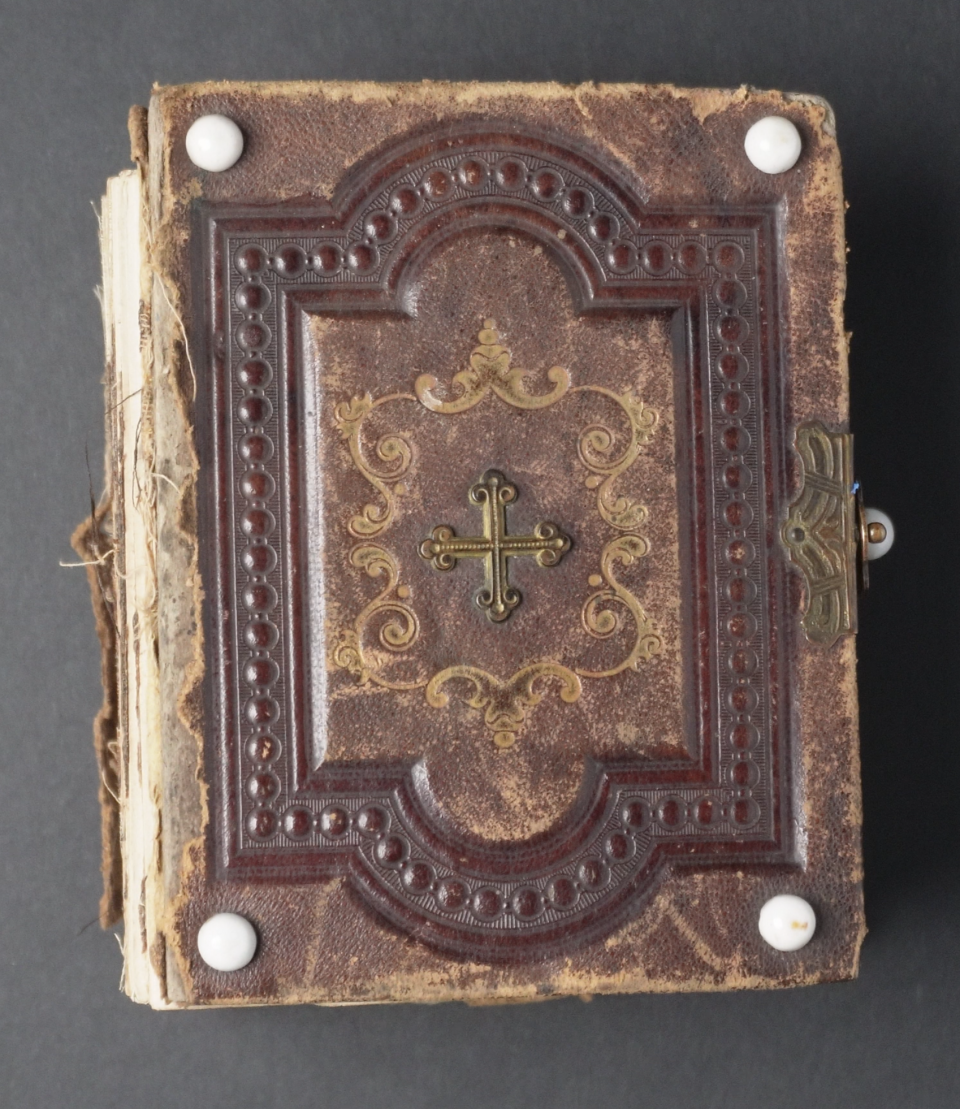
Decorative leather cover of an antique family photo album from Ohio featuring embossing, gold foil details, a brass cross in the center, and white milk glass buttons designed to help the book avoid excess wear.
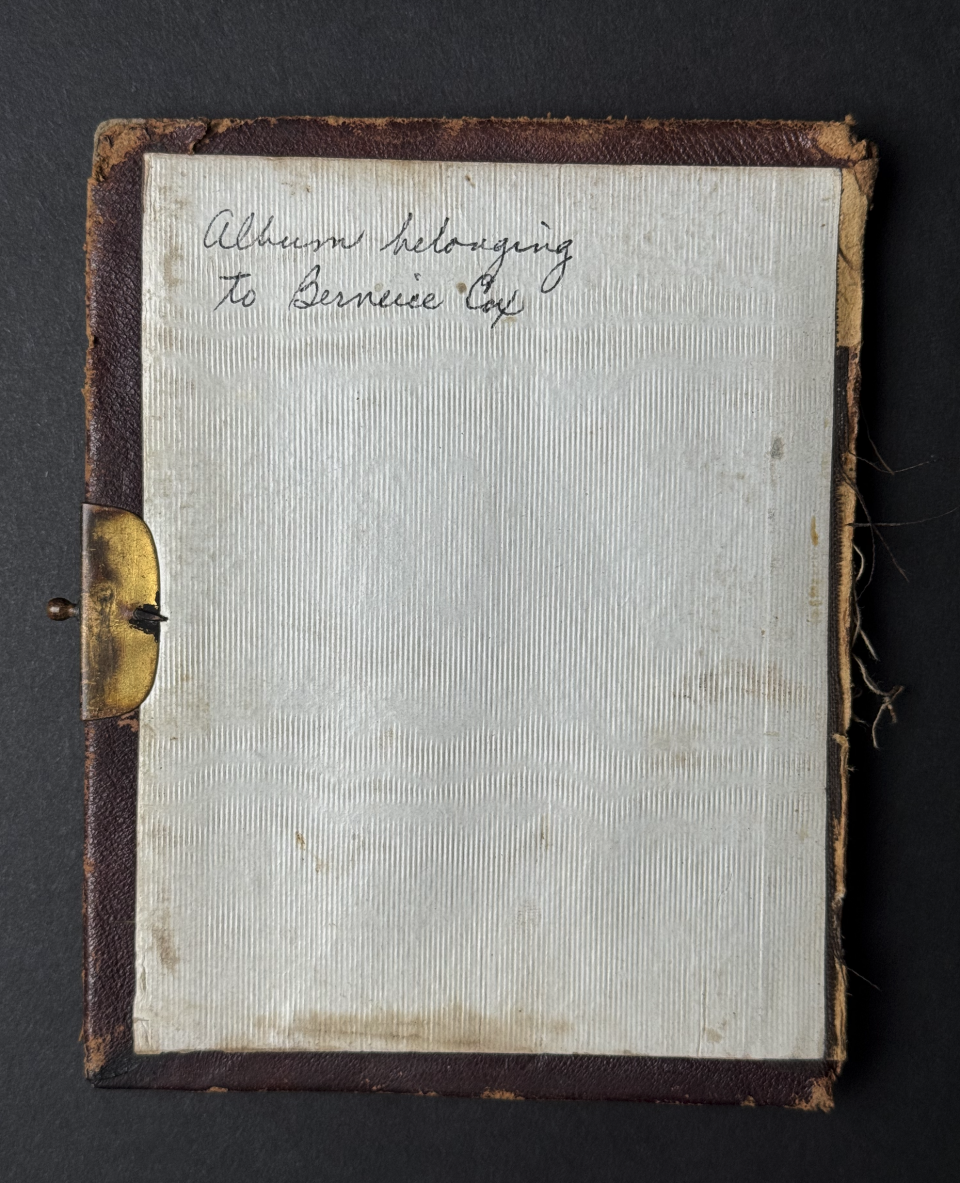
The inside cover of the album is inscribed with black ballpoint pen, "Album belonging to Berneice Cox." Since the rest of the album is marked in pencil with a diffrerent hand, and since ballpoint pen wasn't common until about the 1940s, I think this was written by a descendant.
The inside cover of the album is inscribed with black ballpoint pen, “Album belonging to Berneice Cox.” Since the rest of the album is marked in pencil with a diffrerent hand, and since ballpoint pen wasn’t common until about the 1940s, I think this was written by a descendant.
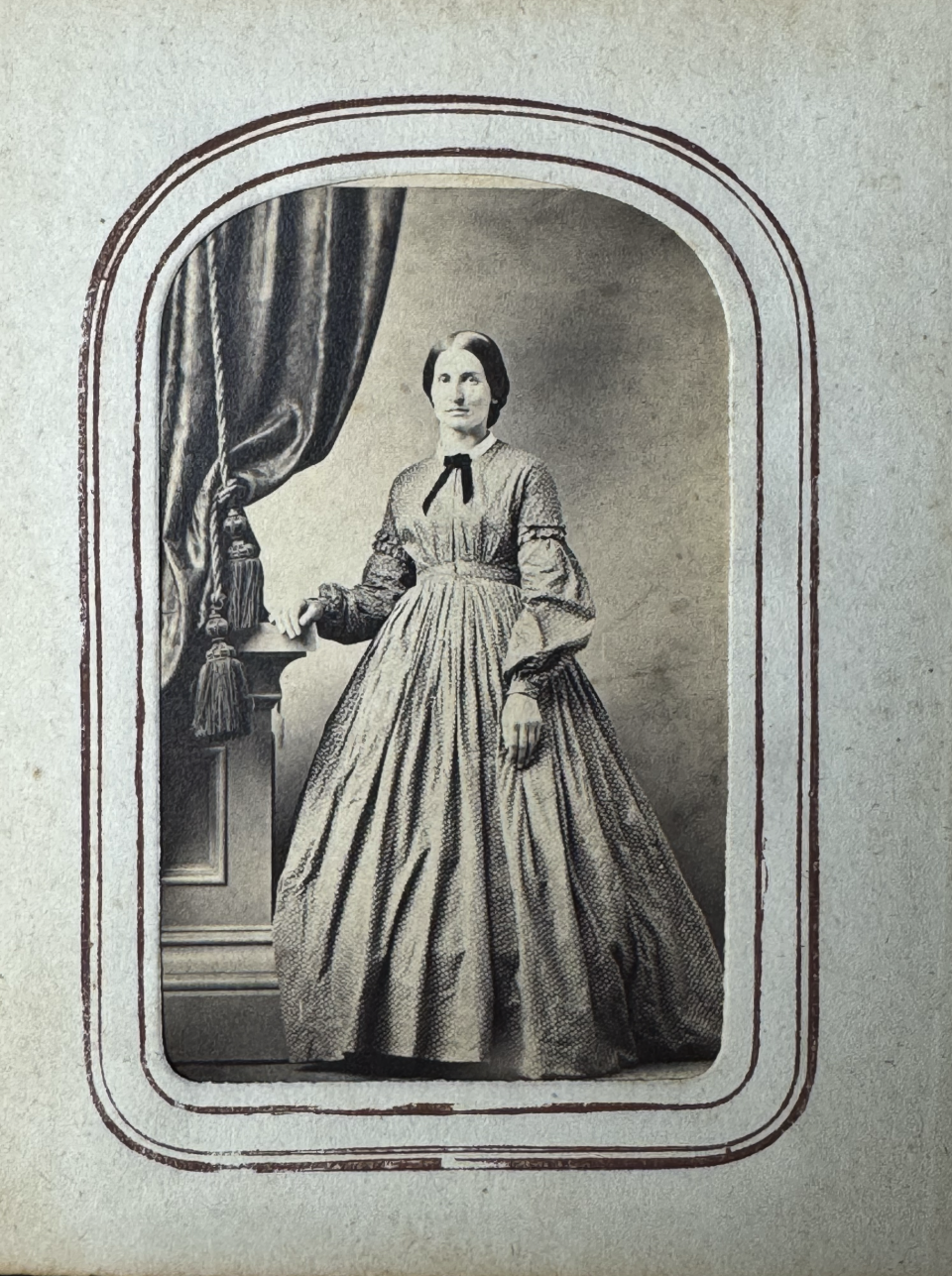
Beautiful, full length portrait of a woman in a spotted dress. We estimate this carte de visite portrait to be from 1860 - 1865, based on her full, bell-shaped skirt, narrow waist, and large pagoda-style sleeves. Her center-parted, smooth hair gathered toward the back is also compatible with the Civil War era. The elaborate curtain, pedestal, and painted studio backdrop are also typical of CdV portraiture of the 1860s.
Beautiful, full length portrait of a woman in a spotted dress. We estimate this carte de visite portrait to be from 1860 – 1865, based on her full, bell-shaped skirt, narrow waist, and large pagoda-style sleeves. Her center-parted, smooth hair gathered toward the back is also compatible with the Civil War era. The elaborate curtain, pedestal, and painted studio backdrop are also typical of CdV portraiture of the 1860s.
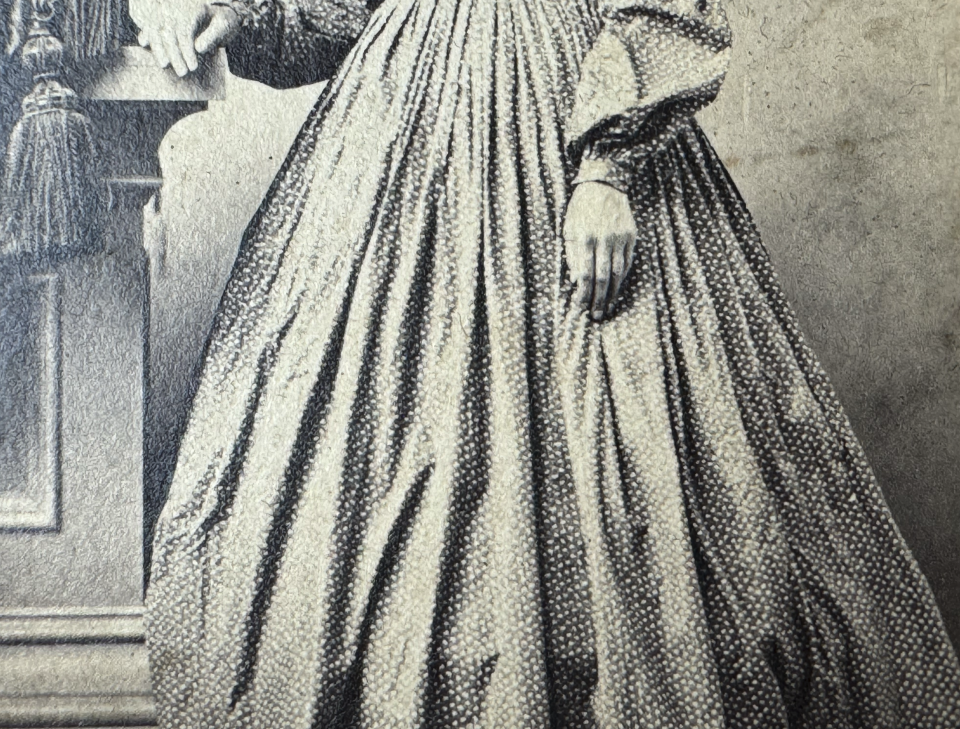
Close-up detail of the dress and hand of the woman pictured in the portrait above.
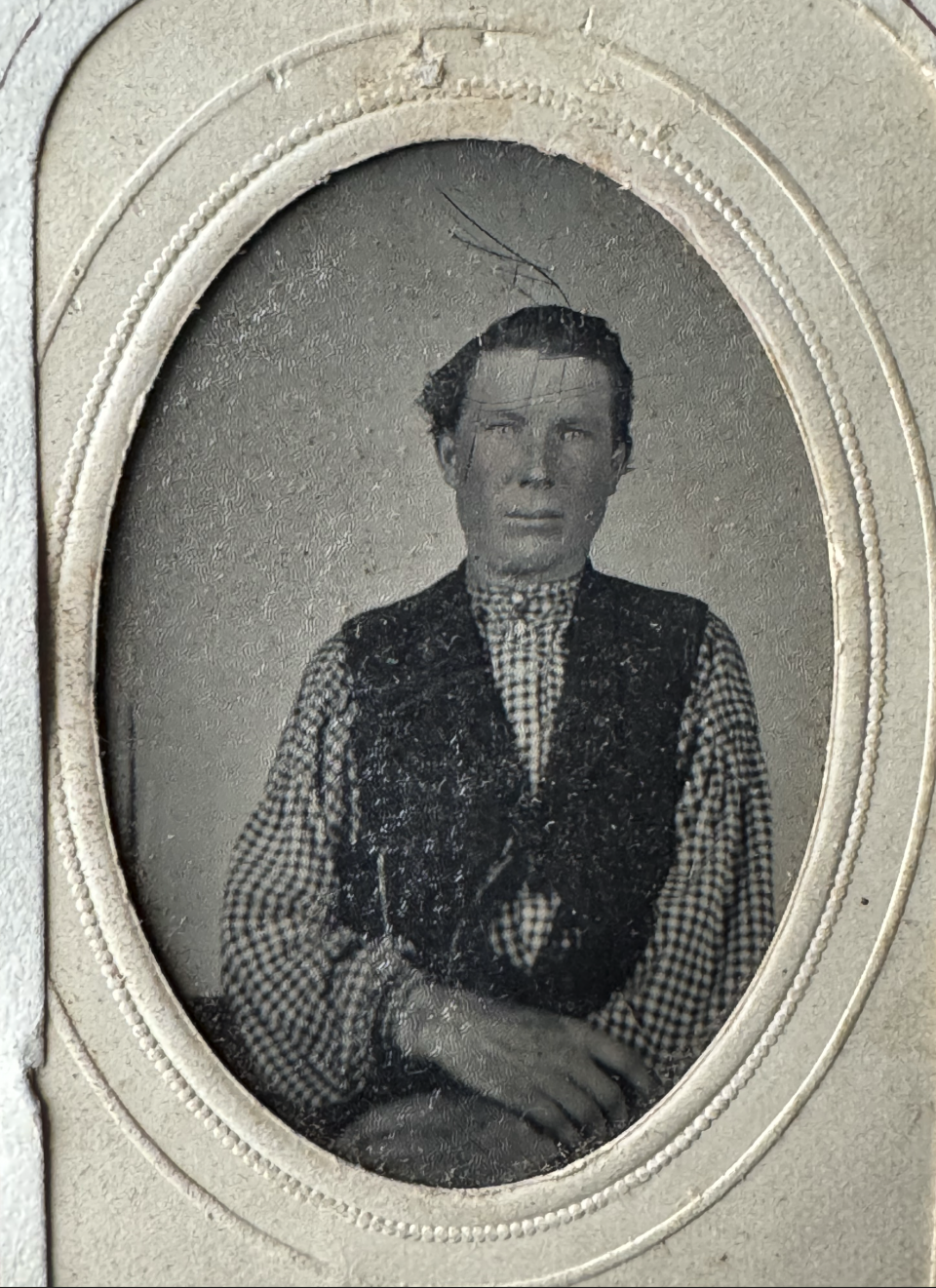
Tintype portrait of Dan Cox, whose name was written in pencil on the album mount. Ink markings over the surface of the photo almost look like a crude drawing of an Indian headband with one feather.
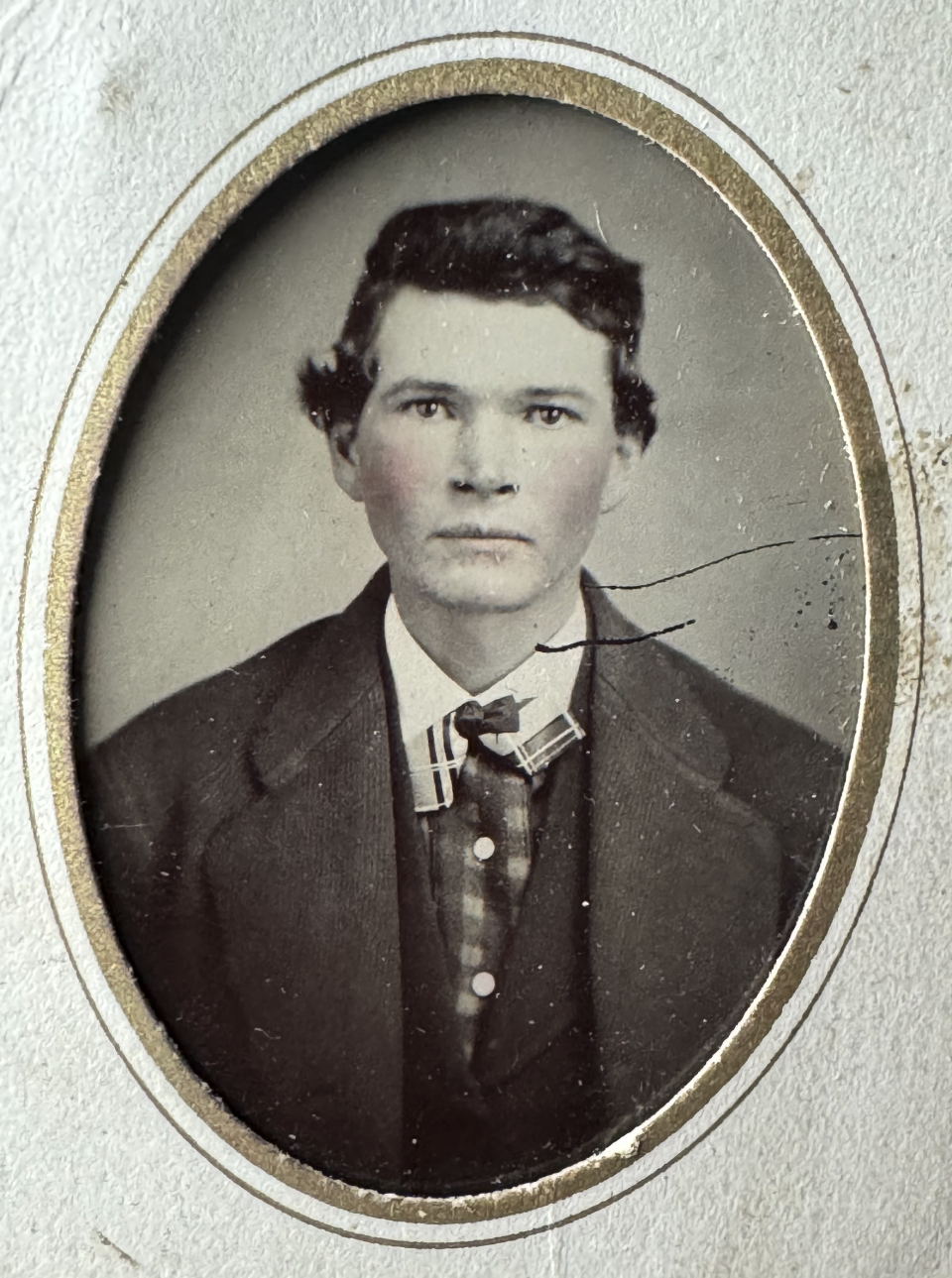
Tintype portrait of an unidentified young man with a touch of pink paint added to his cheeks.
Tintype portrait of an unidentified young man with a touch of pink paint added to his cheeks and lips.
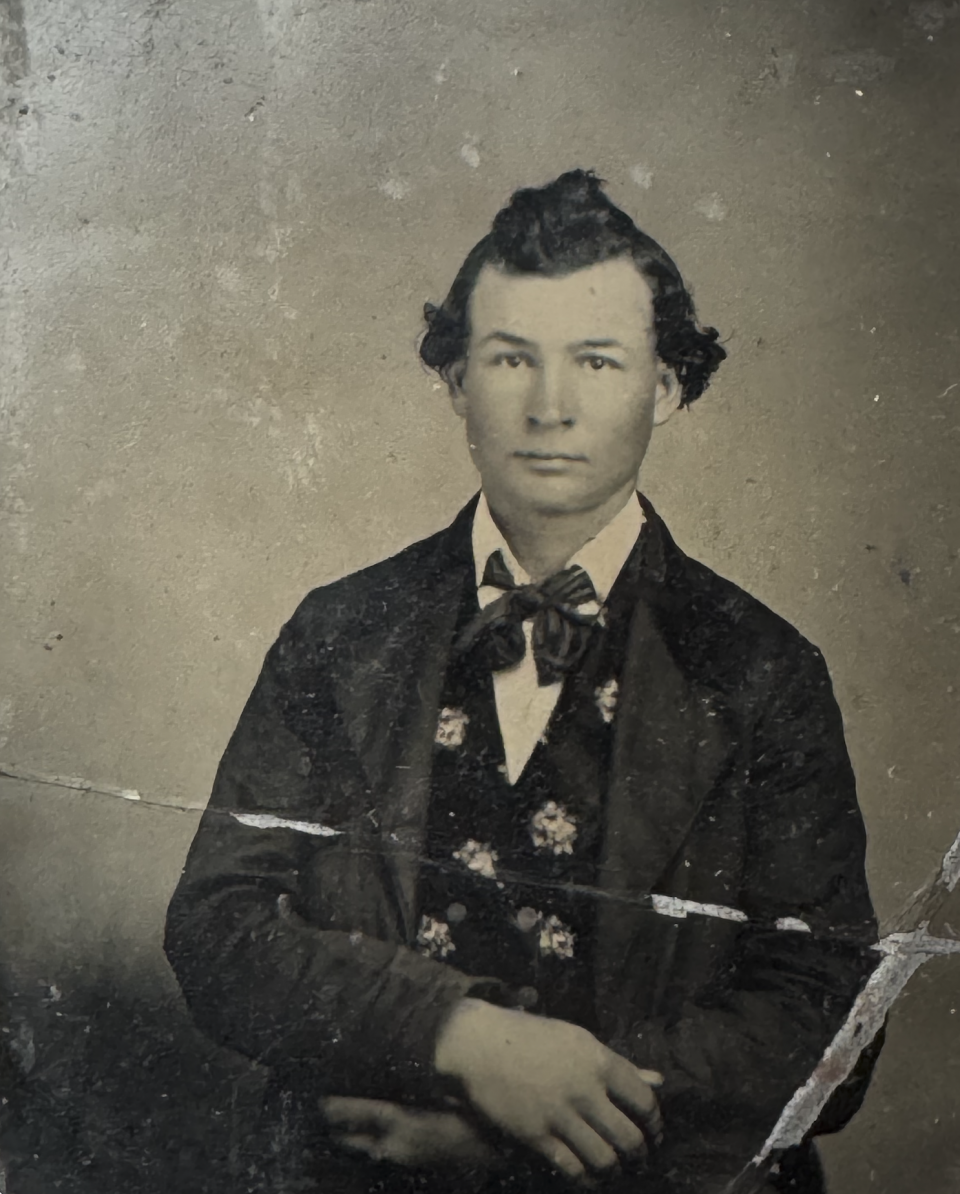
Early 1860s tintype portrait with surface damage, possibly resulting from bends in the metal. His hairstyle and broad bowtie help place the date to the early 1860s. Note the strong familial resemblance to the two photographs immediately above this one.
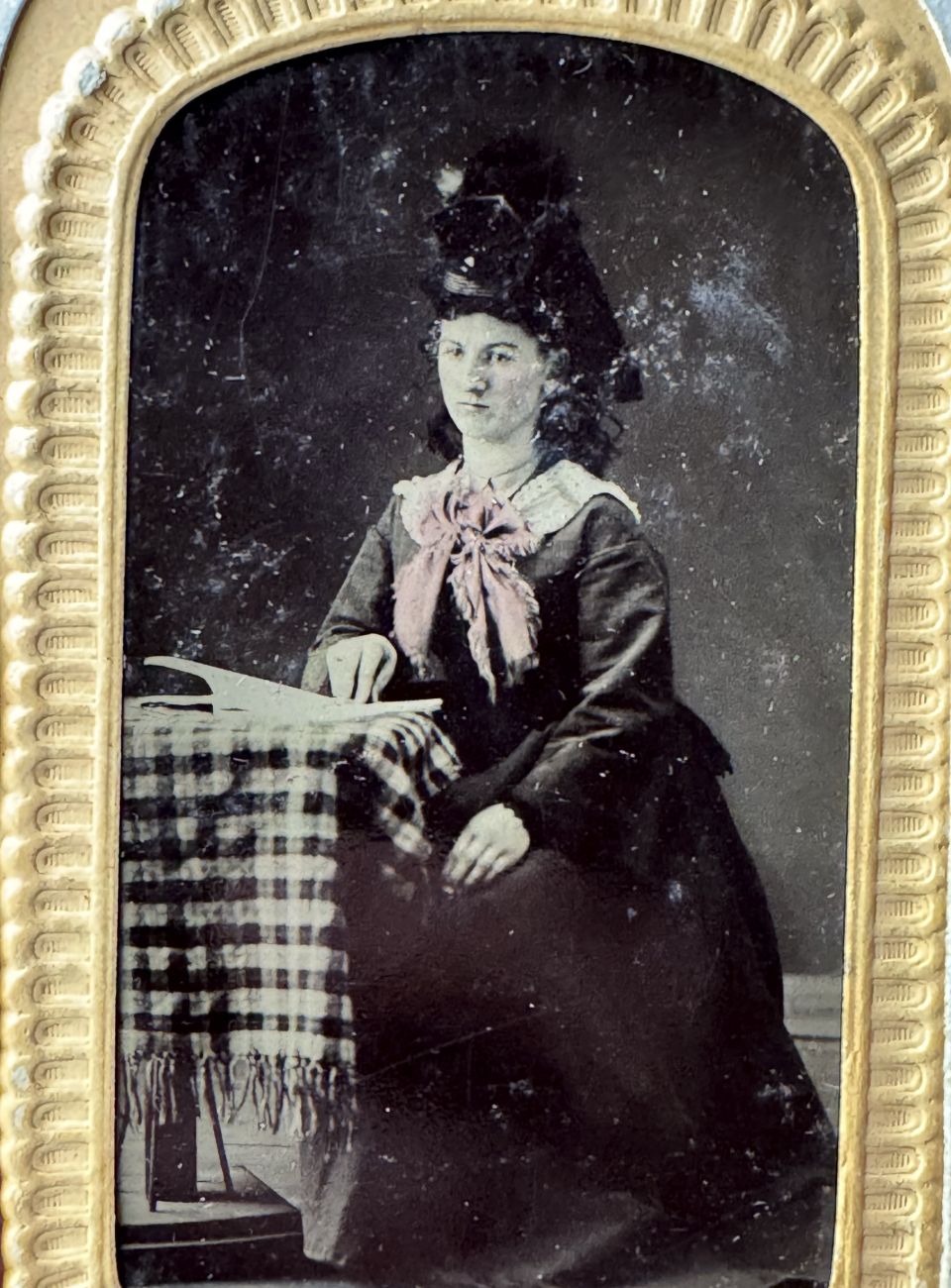
Close-up image of a tintype portrait of an unidentified young woman with a large hat and hand-colored pink scarf.
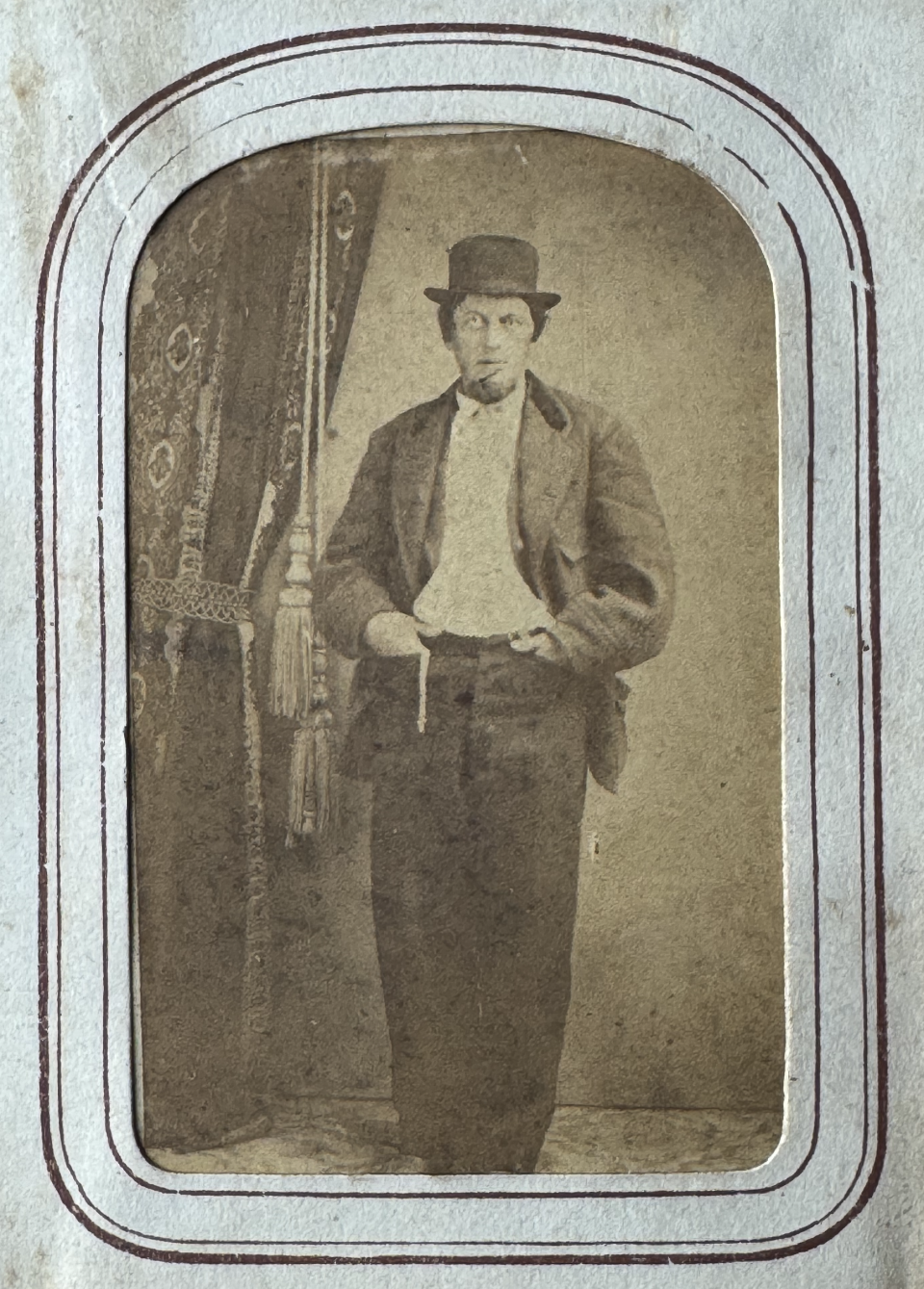
Carte de visite portrait of an unidentified man in a bowler hat, sack coat, and baggy trouser. Probably late 1860s - 1870s.
Carte de visite portrait of an unidentified man in a bowler hat, sack coat, and baggy trouser. Probably late 1860s – 1870s.
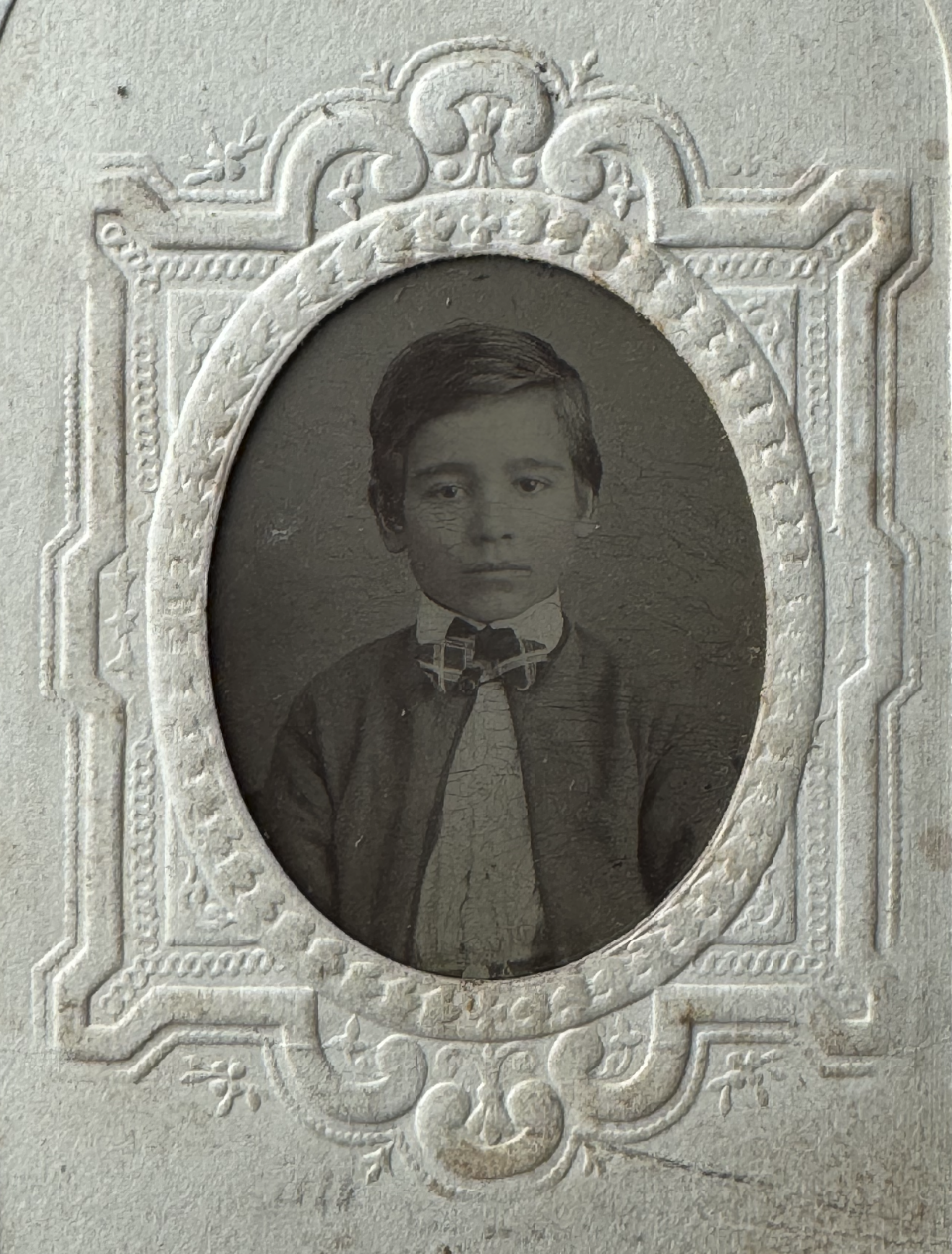
Tintype portrait of a boy with a clean cut hairstyle wearing a plaid bowtie. Note the ornate embossing of the paper mat.
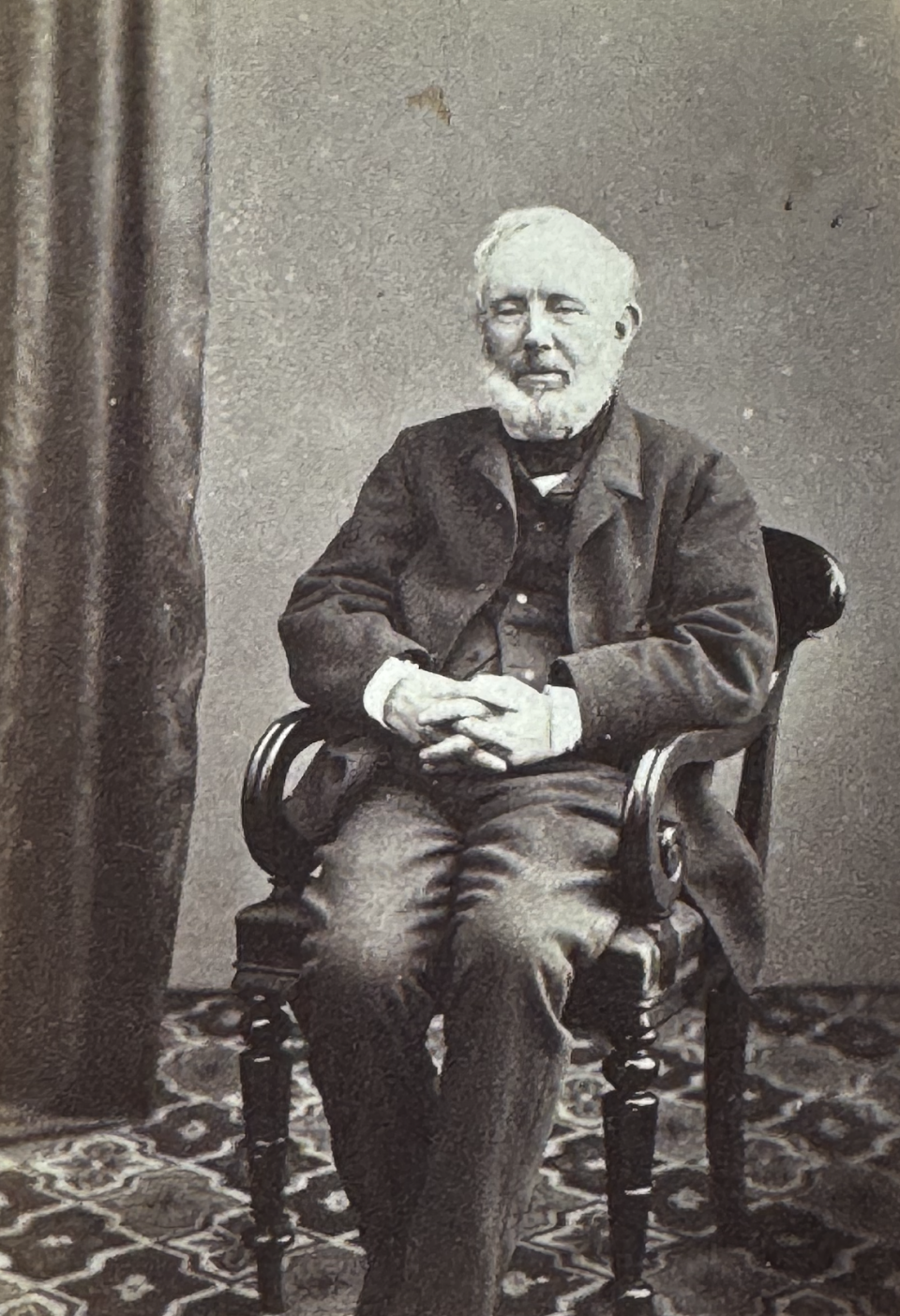
Distinguished carte de visite portrait of a well-dressed white-haired gentleman who was not identified.
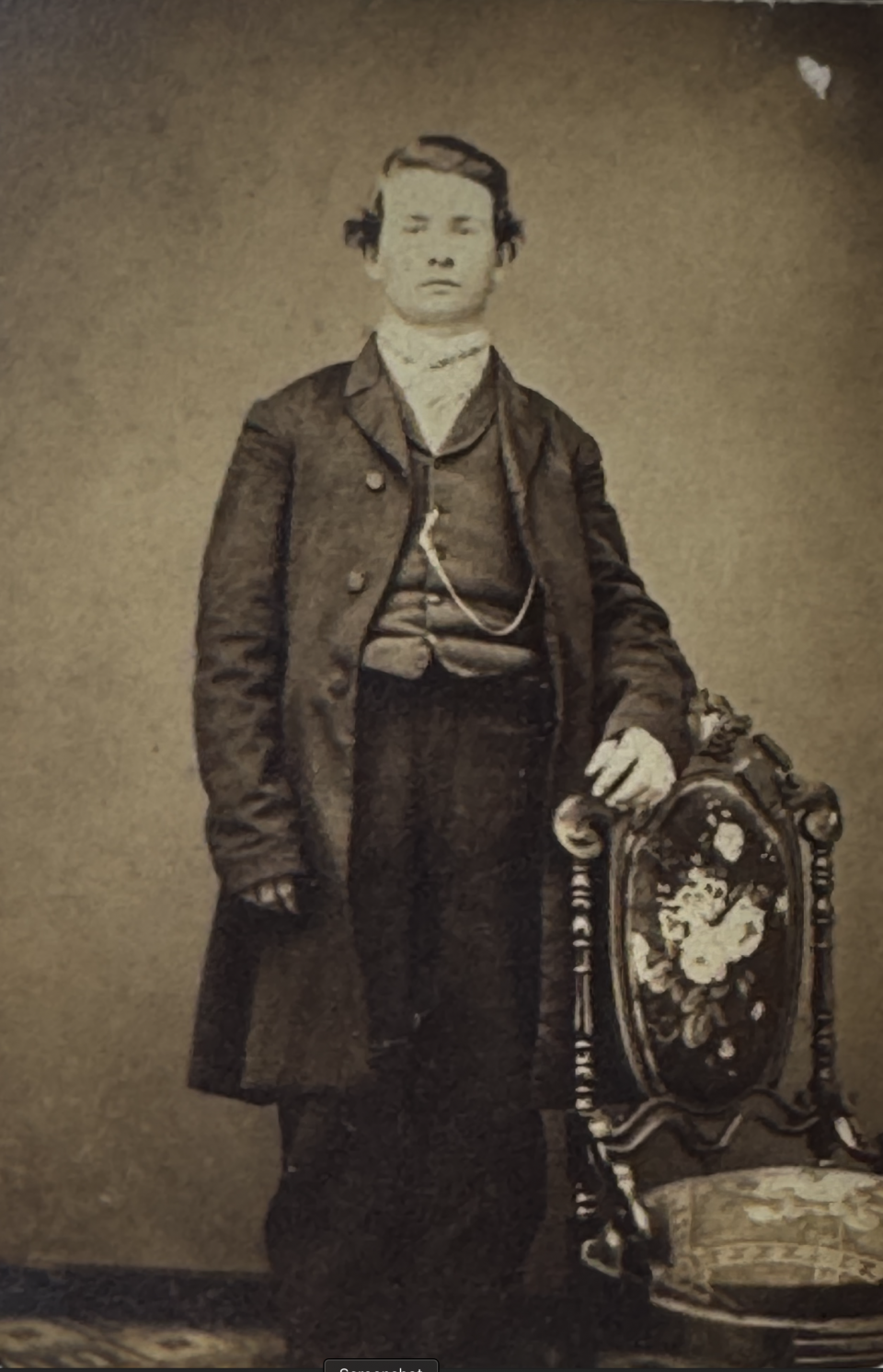
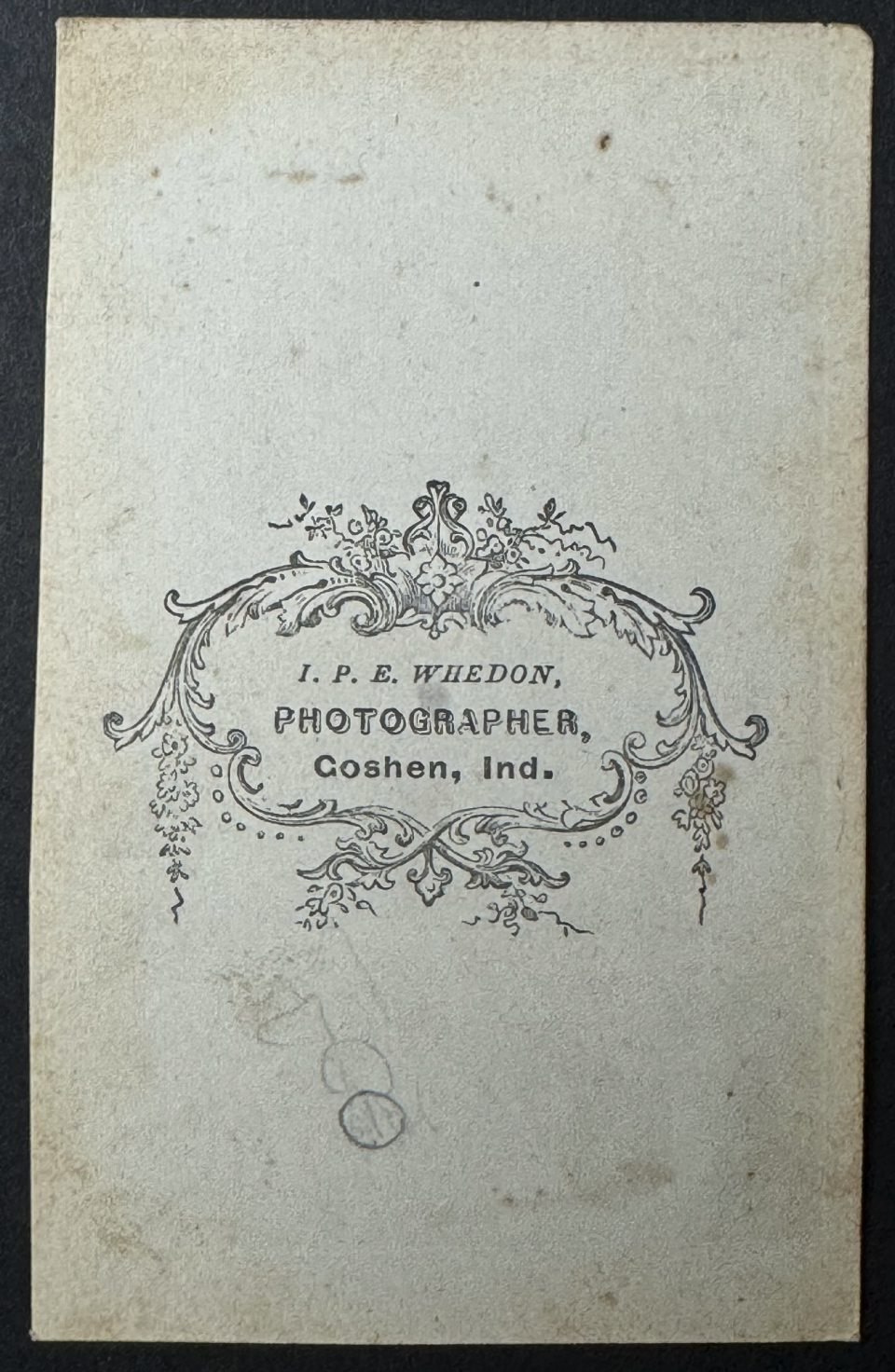
Early-to-mid-1860s carte de visite portrait of a man wearing a long frock coat with a somewhat rolled lapel, waistcoat, and prominent watch chain which help place him in that date range. The highly ornate, upholstered chair is typical of the elaborate photographic studio settings used for CDVs during the 1860s. The above portrait was made by the studio of I.P.E. Whedon of Goshen, Indiana, lnfo on the back shown below.
The above portrait was made by the studio of I.P.E. Whedon of Goshen, Indiana. Whedon operated from 1868-1873 in Goshen, in northeast Indiana not far from the Michigan state line. According to The Indiana Album, he operated on Main Street in a space of J.L. Kindig's store.
The above portrait was made by the studio of I.P.E. Whedon of Goshen, Indiana. Whedon operated from 1868-1873 in Goshen, in northeast Indiana not far from the Michigan state line. According to The Indiana Album, he operated on Main Street in a space of J.L. Kindig’s store.
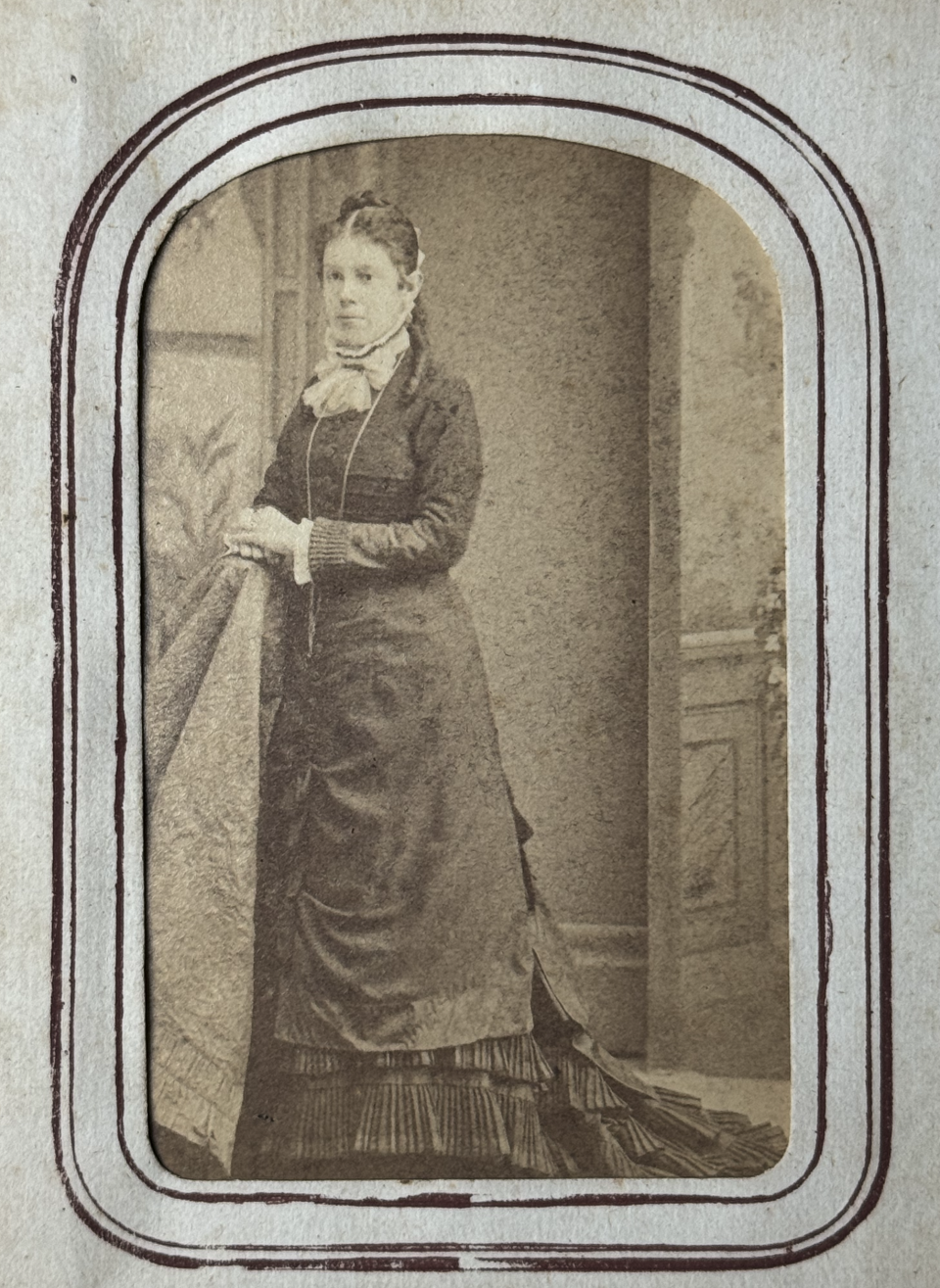
A beautiful young woman in a floor length dress, labeled in pencil below her portrait as being Cora Spaulding.
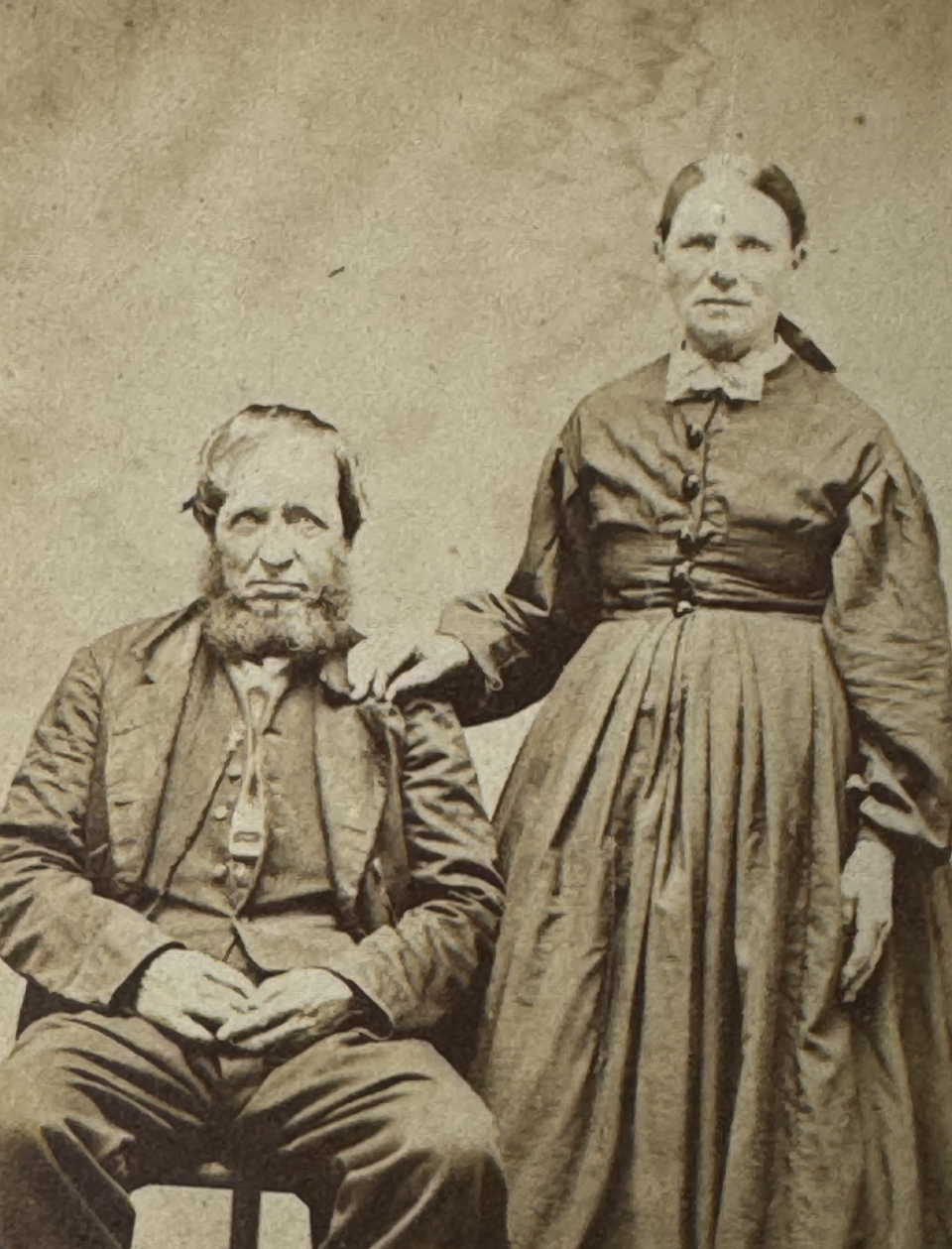
Unidentified elders seen in a carte de visite albumen portrait.
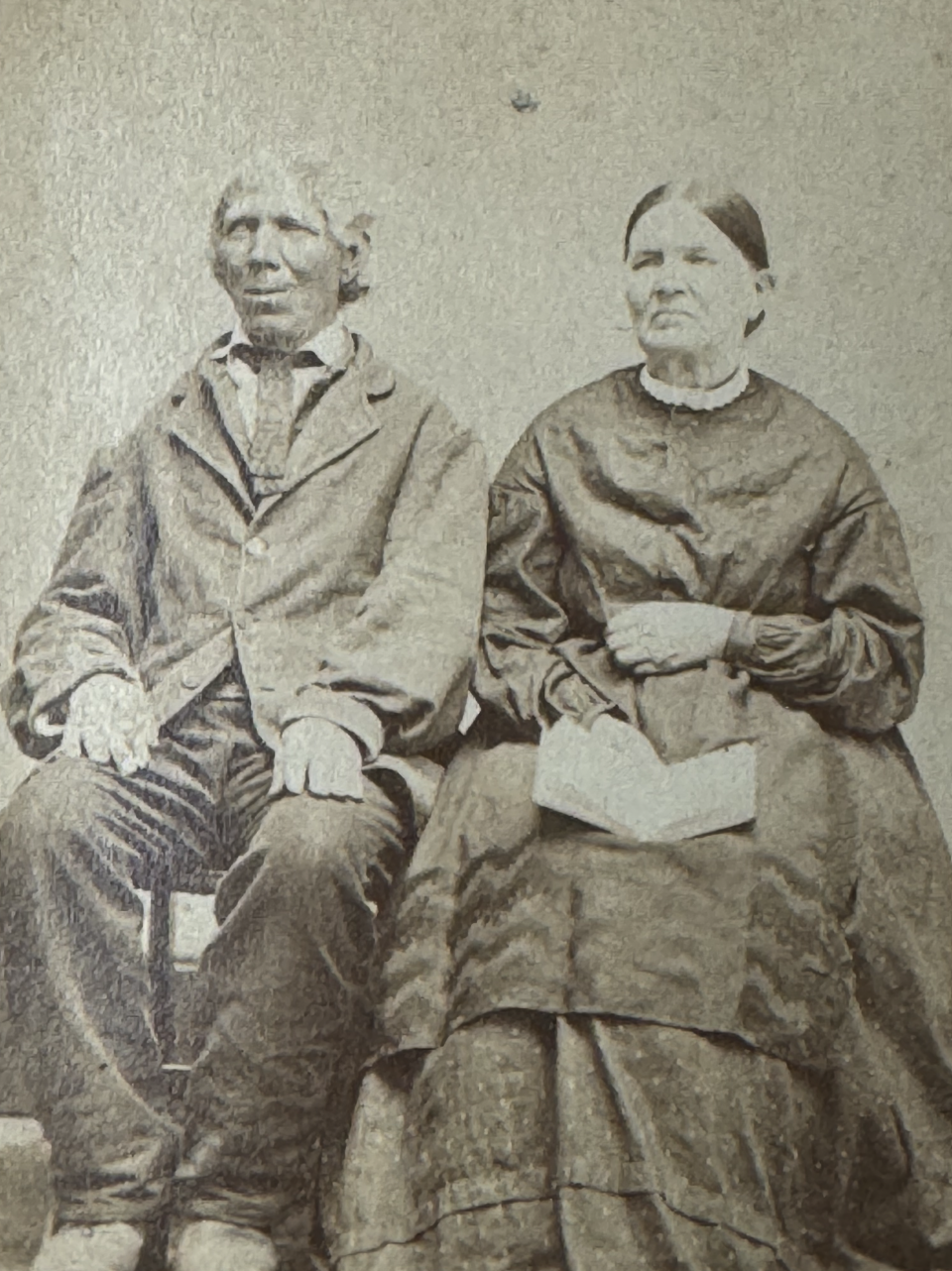
Another set of unidentified elders seen in a carte de visite albumen portrait. The wife is holding what appears to be an open book of scriptures on her lap.
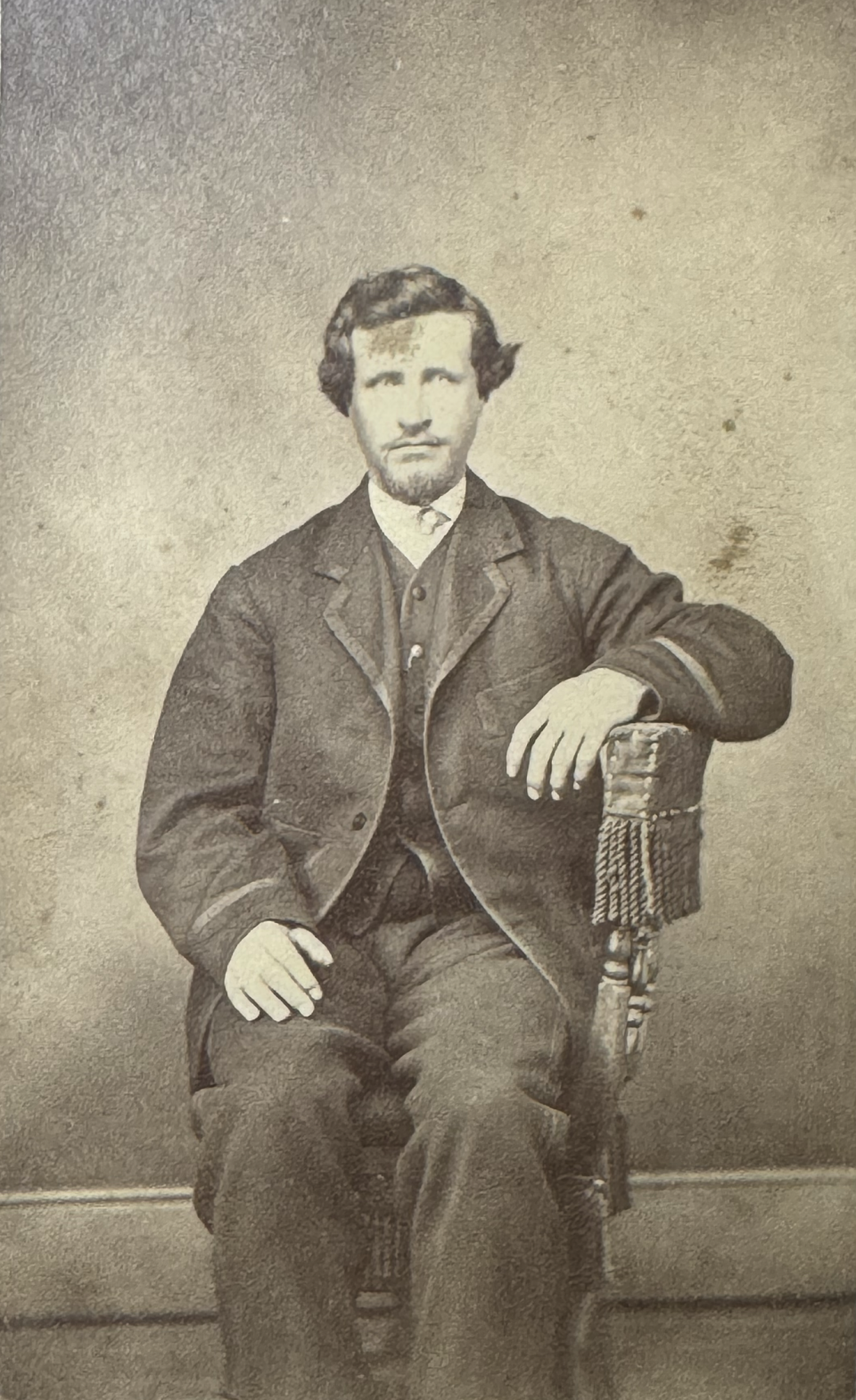
Portrait of an unidentified young man made at the studio of W.A. Smith of Plymouth, Ohio. See the studio's imprint below.
Portrait of an unidentified young man made at the studio of W.A. Smith of Plymouth, Ohio. See the studio’s imprint below.
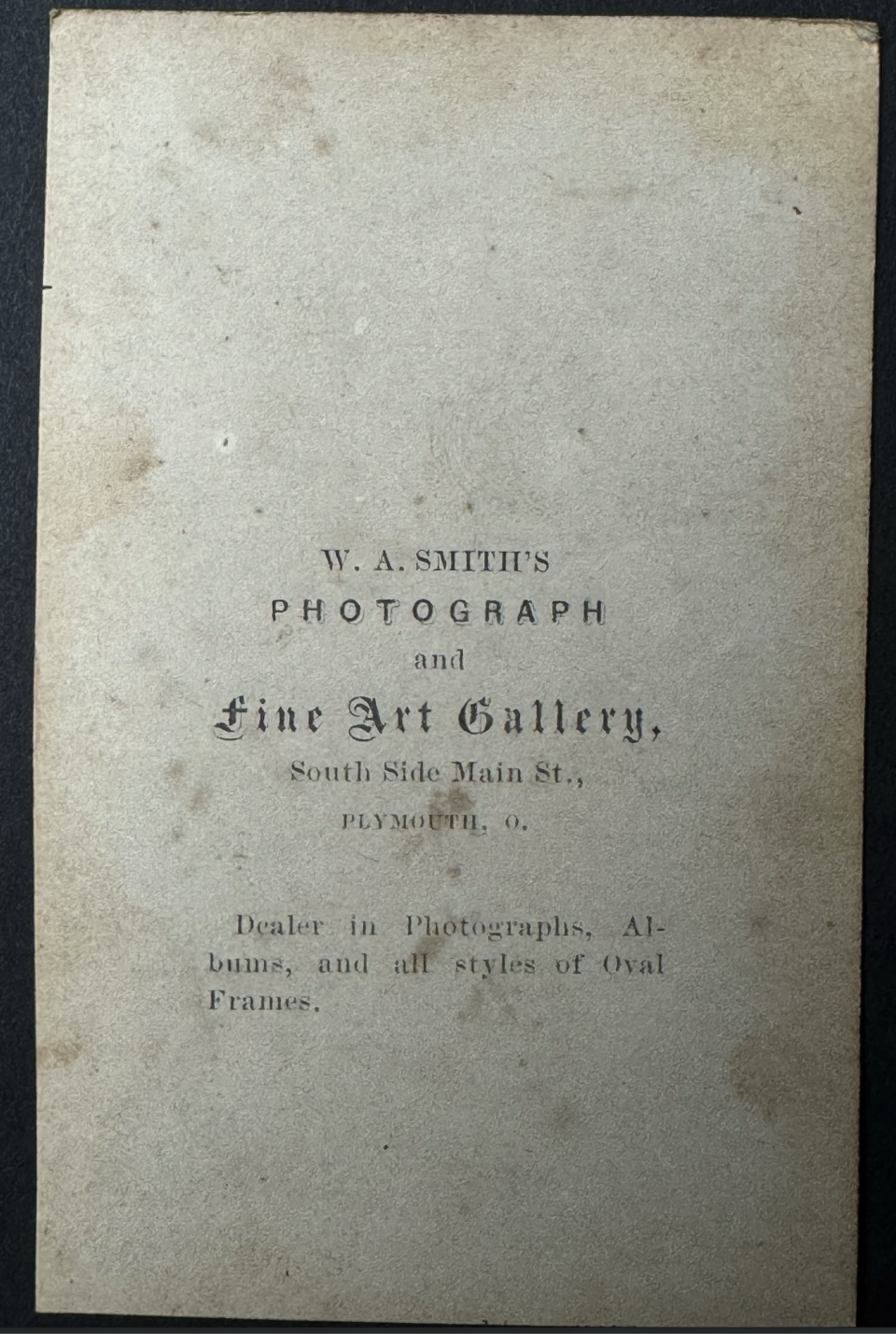
Imprint of the South Side Main Street studio of W.A. Smith of Plymouth, Ohio, from the back of a carte de visite portrait of the young man (above) probably made in the 1860s.
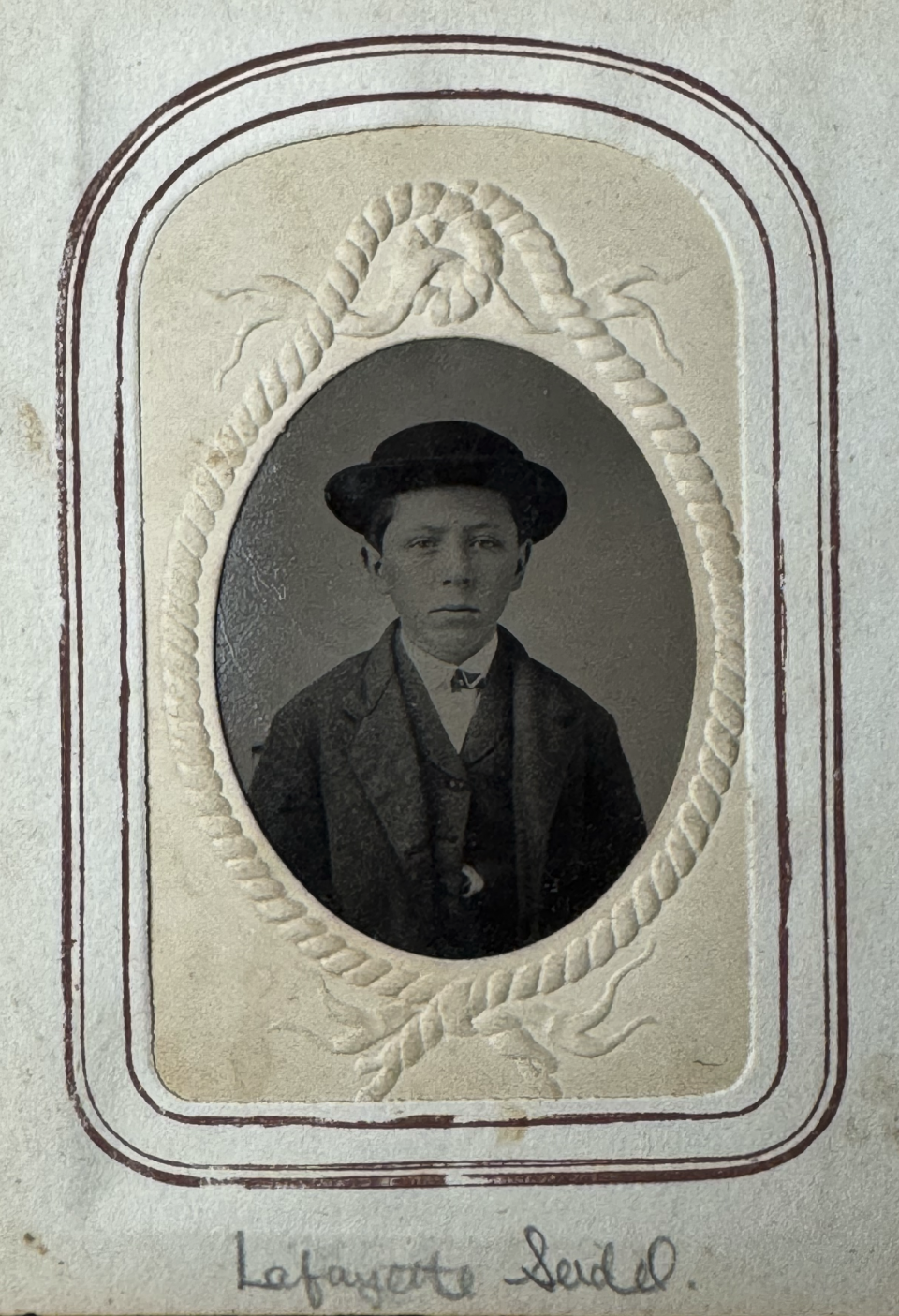
Tintype portrait of a boy named Lafayette Seidel.
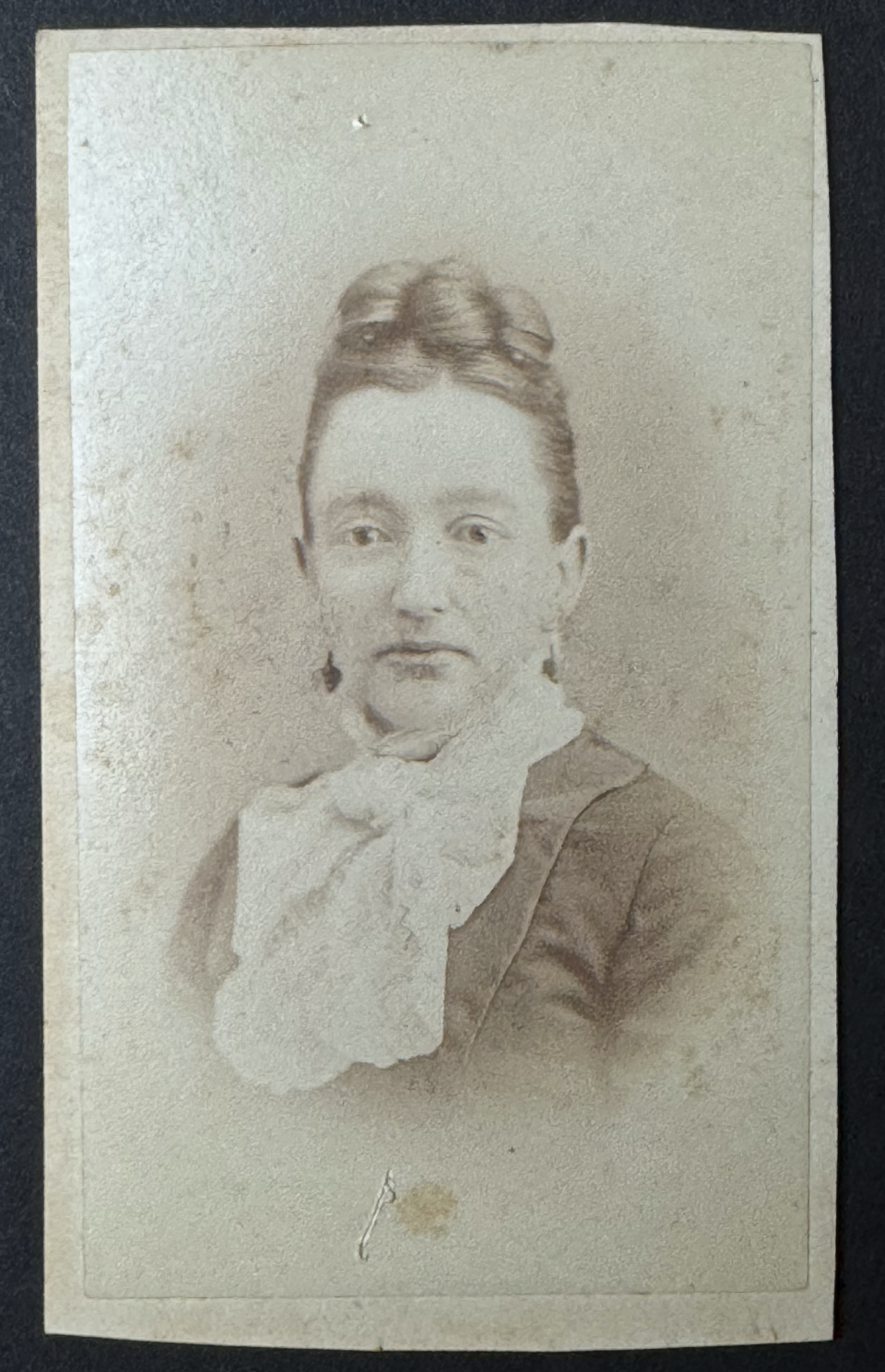
Portrait of a young woman whose name was inscribed in pencil beneath her picture -- Sylvia Cox. This carte de visite was made by the studio of C.A. Cross, of Sandusky, Ohio -- imprint shown below.
Portrait of a young woman whose name was inscribed in pencil beneath her picture — Sylvia Cox. This carte de visite was made by the studio of C.A. Cross, of Sandusky, Ohio — imprint shown below.
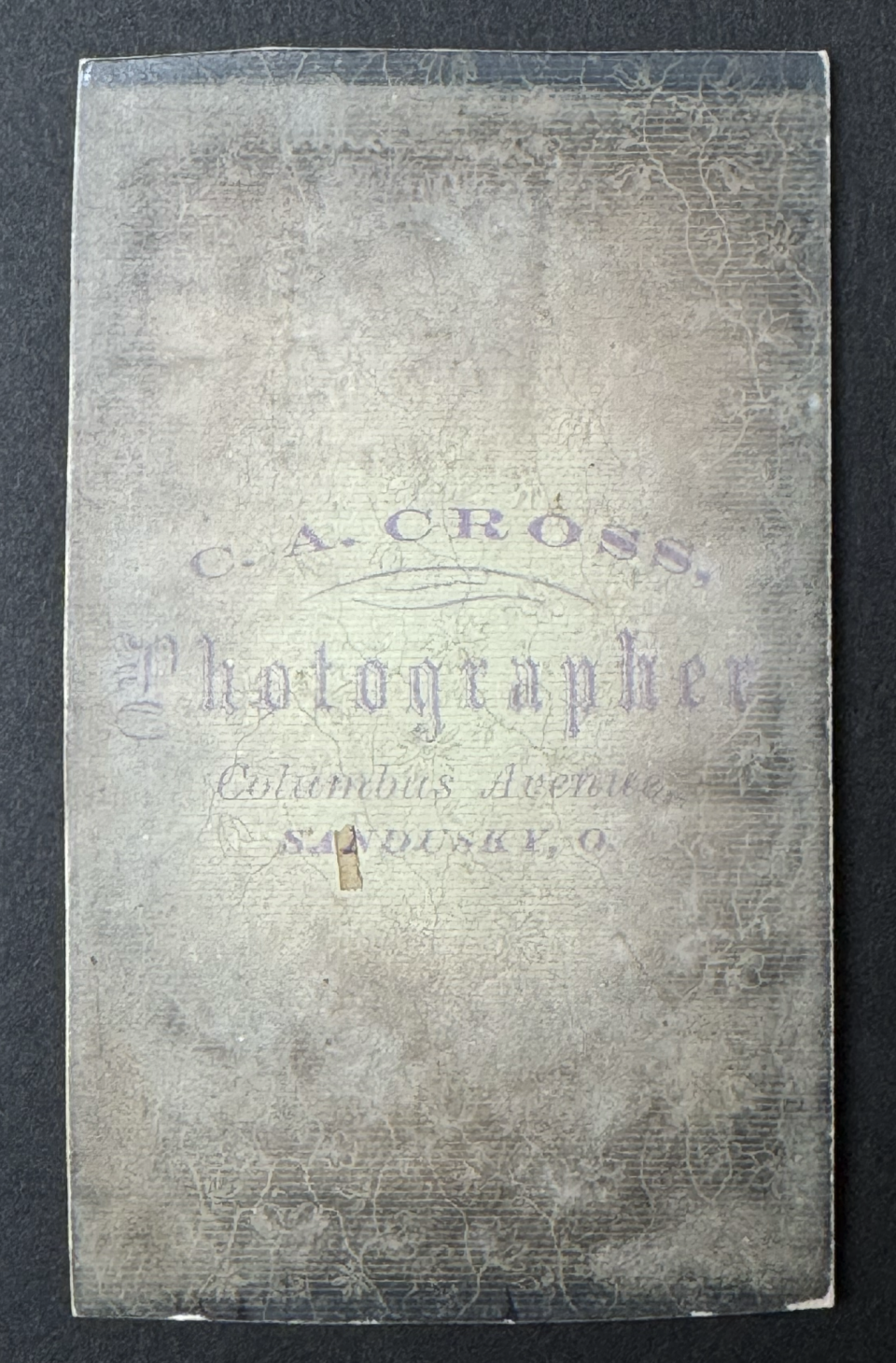
Carte de visite imprint of the studio of C.A. Cross, of Sandusky, Ohio. Cross is identified at two studios addresses, with the Columbus Avenue studio being earlier in his career.

The video comes from my Antique Photography Channel on YouTube. Subscribe here.


Discover more from Shadows and Light

Subscribe to get the latest posts sent to your email.

Leave a Reply

Close